
Last updated September 10, 2026
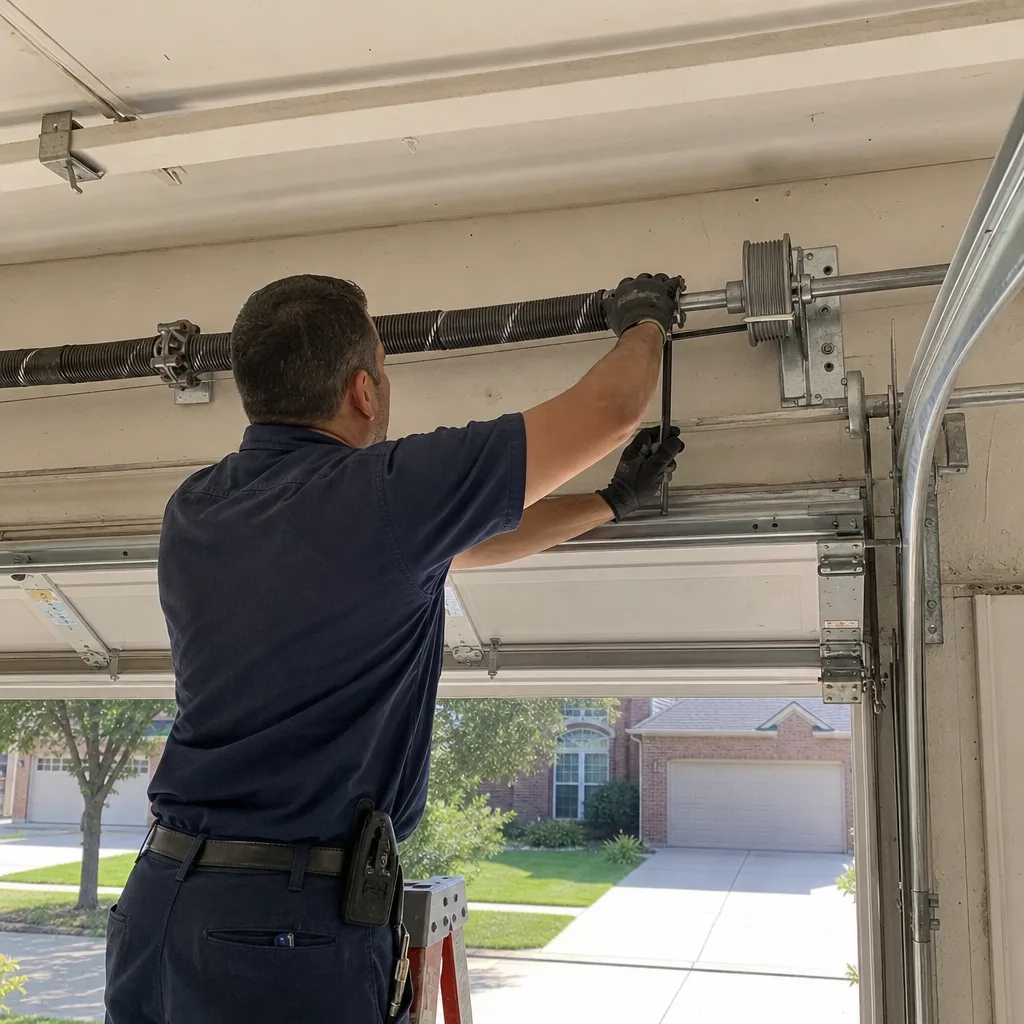
Full 25-point door and opener safety check with every visit - springs, cables, rollers, tracks, and your LiftMaster or Chamberlain opener included
You get a price before we start. It does not change when the truck arrives.
 Before
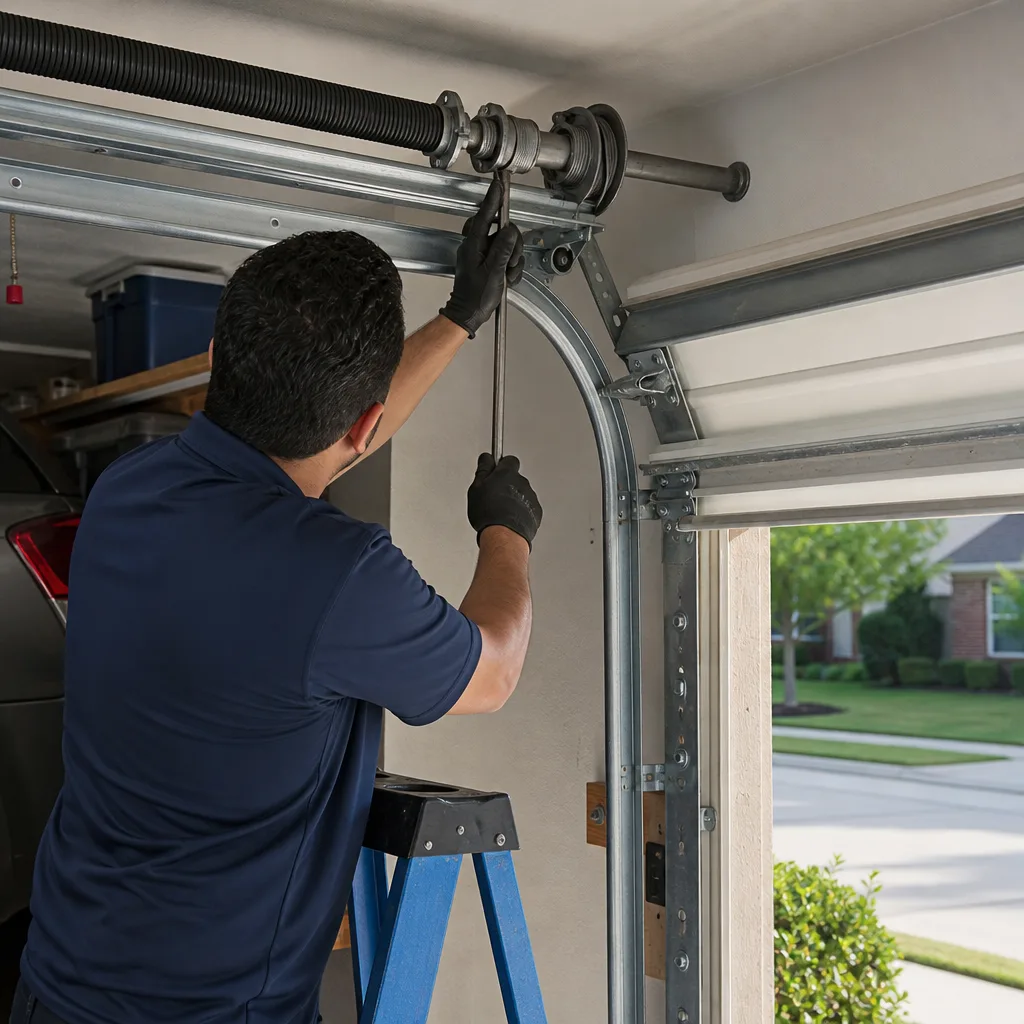 After
After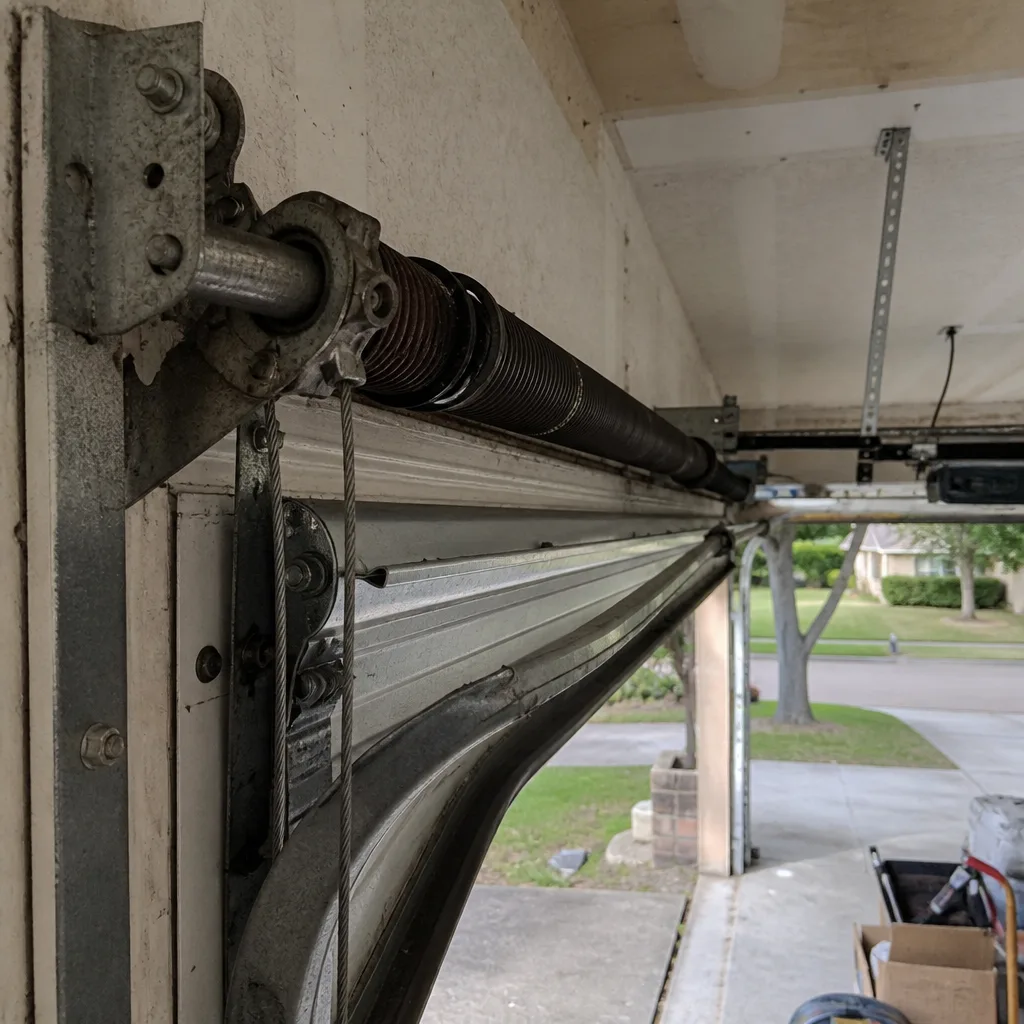 Before
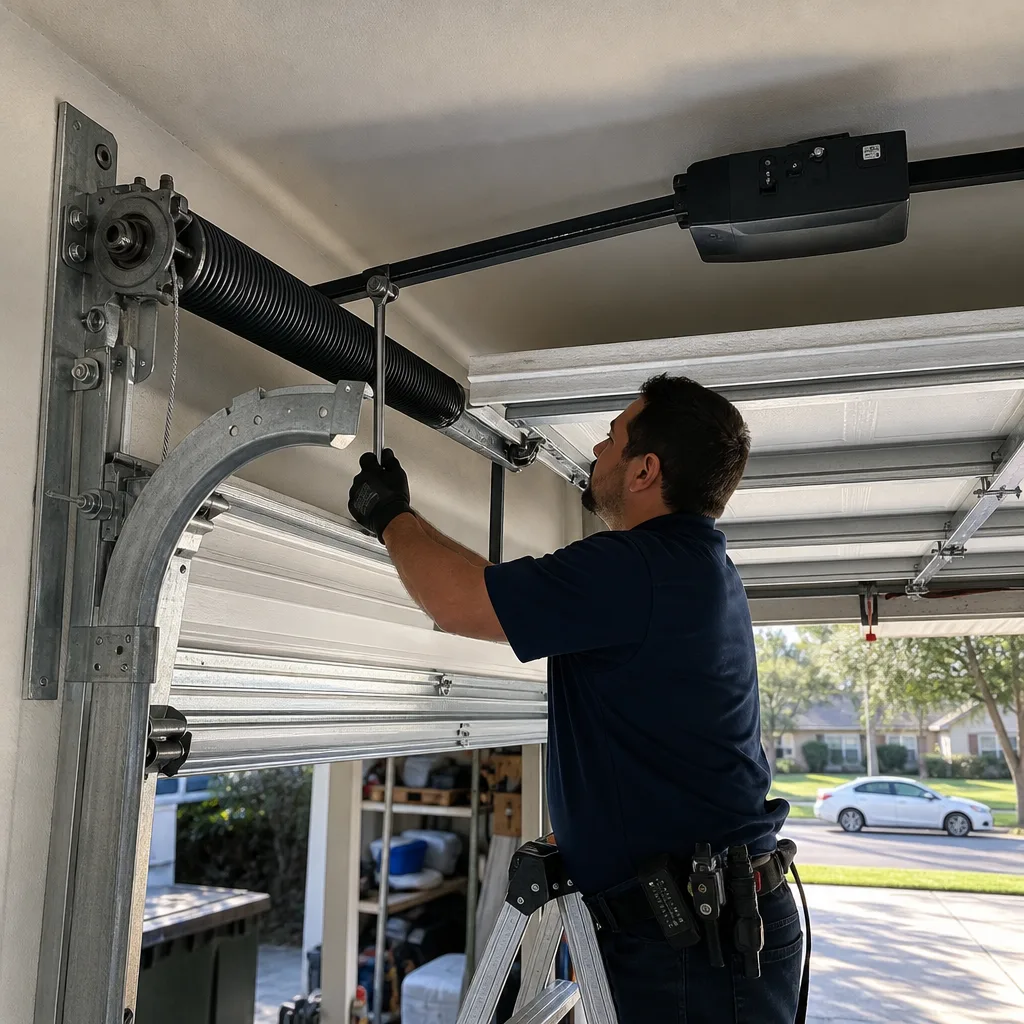 After
After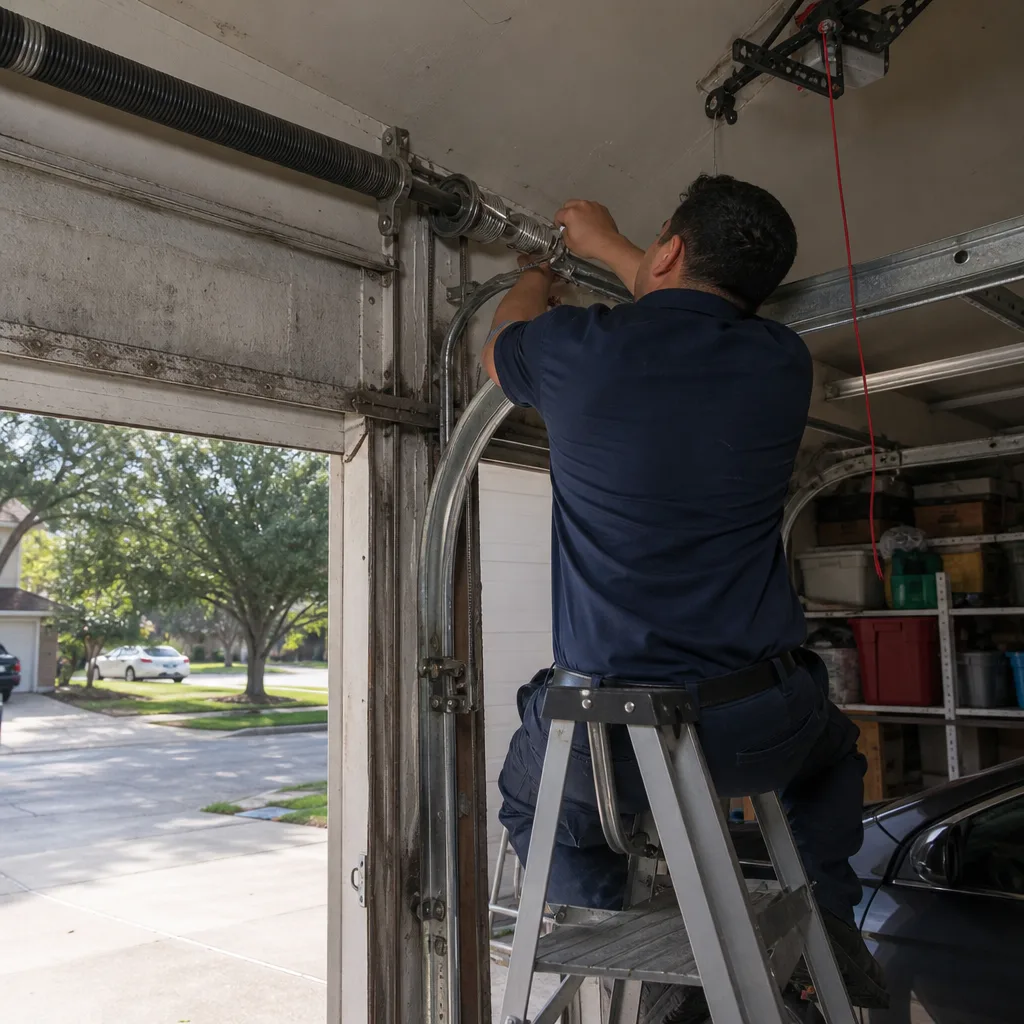 Before
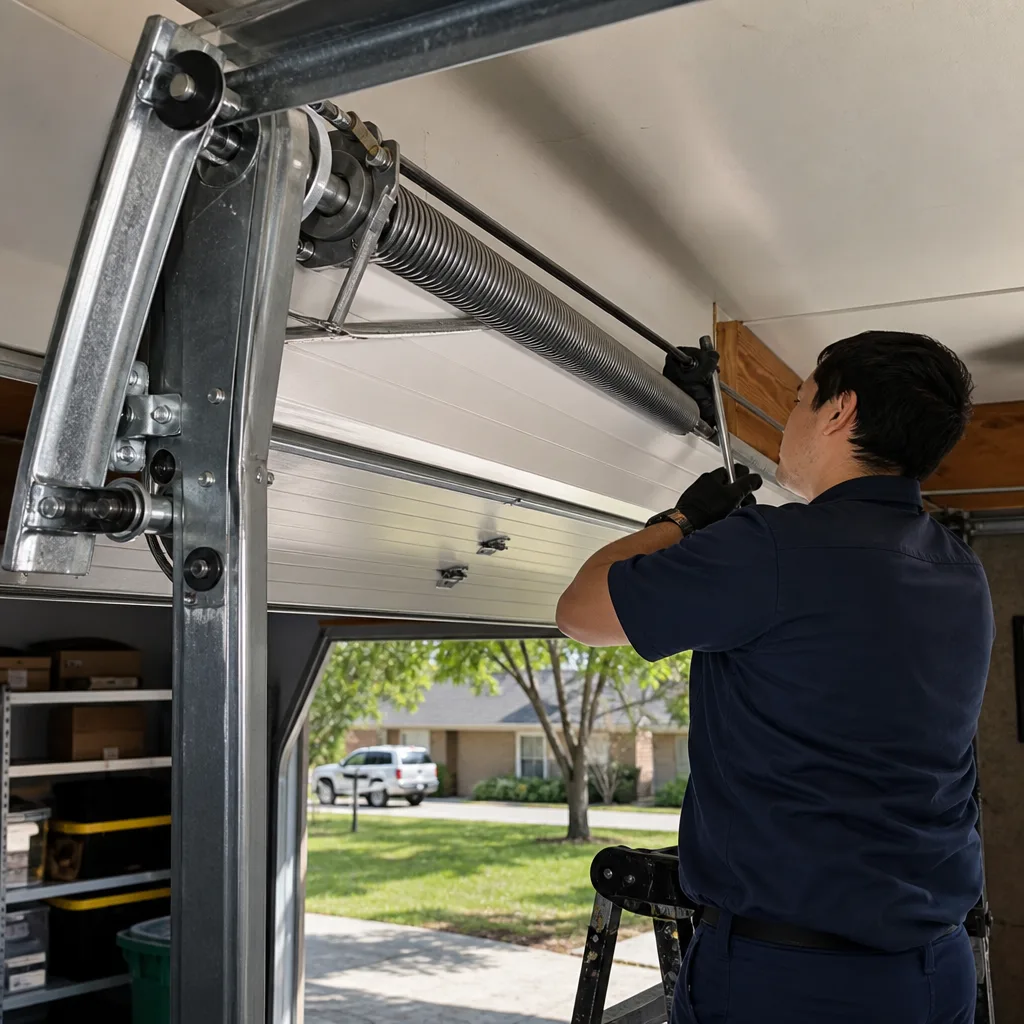 After
AfterThe Complete Guide to Garage Door in Sugar Land
Most Sugar Land homeowners replace their garage door once every 15 to 20 years, and the single biggest regret Otto hears at the follow-up call is “I wish I’d known about the wind load rating before I bought it.” That regret costs somewhere between $1,800 and $4,500 to fix. This guide is what we wish every homeowner in Sugar Land knew before they spent a dime: how our clay soil throws doors out of alignment, why our humidity eats cheap hardware, what HOA boards in First Colony and Telfair actually require, and how to buy a door that will still be working after the next tropical storm. You’ll learn what matters, what’s marketing fluff, and what to ask before anyone touches your door.
Quick Answer
A garage door in Sugar Land is not a national purchase: it’s a wind-rated, humidity-resistant, clay-soil-adjusted system that has to satisfy Fort Bend County building code, your HOA’s architectural committee, and about 10,000 open-close cycles a year in Gulf Coast weather. For a detailed breakdown of what drives these numbers, see our Garage Door Cost Breakdown: The Sugar Land Homeowner’s Reference for 2026. Expect to spend $1,200 to $4,500 installed for a quality steel door, $300 to $700 for spring replacement, and $250 to $600 for opener work. The single most important spec for Sugar Land is wind load rating, followed by insulation R-value and a finish rated for humid, salt-adjacent air.
Table of Contents
- Why Sugar Land’s Clay Soil Moves Your Door
- Wind Load Ratings and the Hurricane Season Reality
- HOA Approval in Sugar Land’s Master-Planned Neighborhoods
- Steel Gauge, Insulation, and Finishes That Survive Humidity
- Why a Dallas Door Spec Fails in Sugar Land
- What Garage Door Work Actually Costs in Fort Bend County
- The Maintenance Schedule That Doubles Door Life
- Common Mistakes to Avoid
- When to Call a Professional
- Frequently Asked Questions
- The Bottom Line
Why Sugar Land’s Clay Soil Moves Your Door
Here’s a fact most national garage door guides never mention: Fort Bend County sits on expansive clay soil, the kind that swells when it rains and shrinks during drought. Your driveway slab and garage foundation shift a fraction of an inch with every wet-dry cycle. Over five or ten years, that fraction compounds. The result is a garage door frame that’s no longer perfectly square, a header that’s drifted a quarter-inch, and a door that starts binding on one side.
We see this pattern in older Sugar Land neighborhoods especially: Sugar Creek, Sugar Mill, parts of First Colony built in the 1980s and early 1990s. Homeowners call us because the opener is straining or the door hangs crooked. They assume the opener motor is dying. In our experience, the opener is working harder because the door itself is fighting the frame. The tracks are no longer plumb. The rollers are grinding. The spring is carrying load it was never rated for.
What this means for you:
- Alignment checks matter more here than in Dallas or Austin. A door that runs smooth on flat, stable ground can go out of alignment in Sugar Land within two or three years if the foundation has shifted.
- Springs wear faster on a misaligned door. A torsion spring rated for 10,000 cycles might only deliver 6,000 if the door is fighting the track every time it moves.
- Track reinforcement is sometimes the right repair. Not a new door. Not a new opener. Just getting the frame square again, reinforcing the track brackets, and re-balancing the spring.
If your door makes a grinding noise, hesitates halfway up, or the gap between door and frame is wider at the bottom than the top, the first thing to check is whether the opening itself is still square. A level and a tape measure will tell you. If it’s off, call someone who has dealt with this exact problem in Sugar Land before, because the fix is different here than it is on stable limestone soil.
For a full breakdown of how we diagnose and fix this, see our Garage Door Repair in Sugar Land page.
Wind Load Ratings and the Hurricane Season Reality
Sugar Land sits about 50 miles inland from the Gulf, close enough that hurricane-force gusts arrive during major storms and tropical storm winds are a near-annual event. Your garage door is typically the largest opening in your house. When wind hits it during a storm, the door acts like a sail. If it fails, the pressure differential can blow out windows, lift the roof, and cause catastrophic structural damage. That’s not fear-mongering. That’s what building codes in the Houston metro are designed to prevent.
The International Residential Code and Fort Bend County amendments require garage doors in this region to meet specific wind load ratings, measured in pounds per square foot (psf); our Garage Door Permits, Codes & Inspections in TX: What You Need to Know covers the full regulatory picture. Most of the Sugar Land area requires a door rated for at least 110 to 130 mph wind speeds, depending on your exact zip code and exposure category. A door rated for calm-weather states, the kind you might find on a national retailer’s website with no local filtering, may carry only a 90 mph rating or less. It will fail you exactly when you need it most.
Here’s what actually matters when a storm is heading toward the Gulf:
- Check the wind load sticker. Every code-compliant door has a label showing its design pressure rating. If the label is missing or illegible, treat the door as unrated.
- Buy a reinforced door from a manufacturer that certifies for coastal wind zones. Wayne Dalton and Clopay both make wind-rated models for the Texas Gulf Coast. So do Amarr and Raynor.
- Look beyond the door panel itself. The track, brackets, hinges, and the garage door opener’s rail all have wind ratings too. A strong panel on weak track hardware is a false sense of security.
- Consider a bracing system for older doors. If your door pre-dates current wind codes, a retrofit brace can add meaningful storm protection without a full replacement. This is a worthwhile conversation to have before June 1, not after a named storm is in the Gulf.
We’ve replaced doors in Sugar Land that failed during Hurricane Harvey and were replaced with budget panels from an out-of-state seller. Those doors rusted within two years and had zero wind certification. A storm-rated door costs more upfront, but it’s the only kind we’d put on our own home in this county.
HOA Approval in Sugar Land’s Master-Planned Neighborhoods
If you live in First Colony, Telfair, Riverstone, Avalon, Greatwood, or any of the other master-planned communities that define Sugar Land, you already know the architectural committee has opinions. What you may not know is how specific garage door submittals get.
Most Sugar Land HOAs require written approval before you replace a garage door. The submittal package typically includes:
- Manufacturer and model number of the proposed door
- Color chip or photo matching the HOA’s approved palette for your street
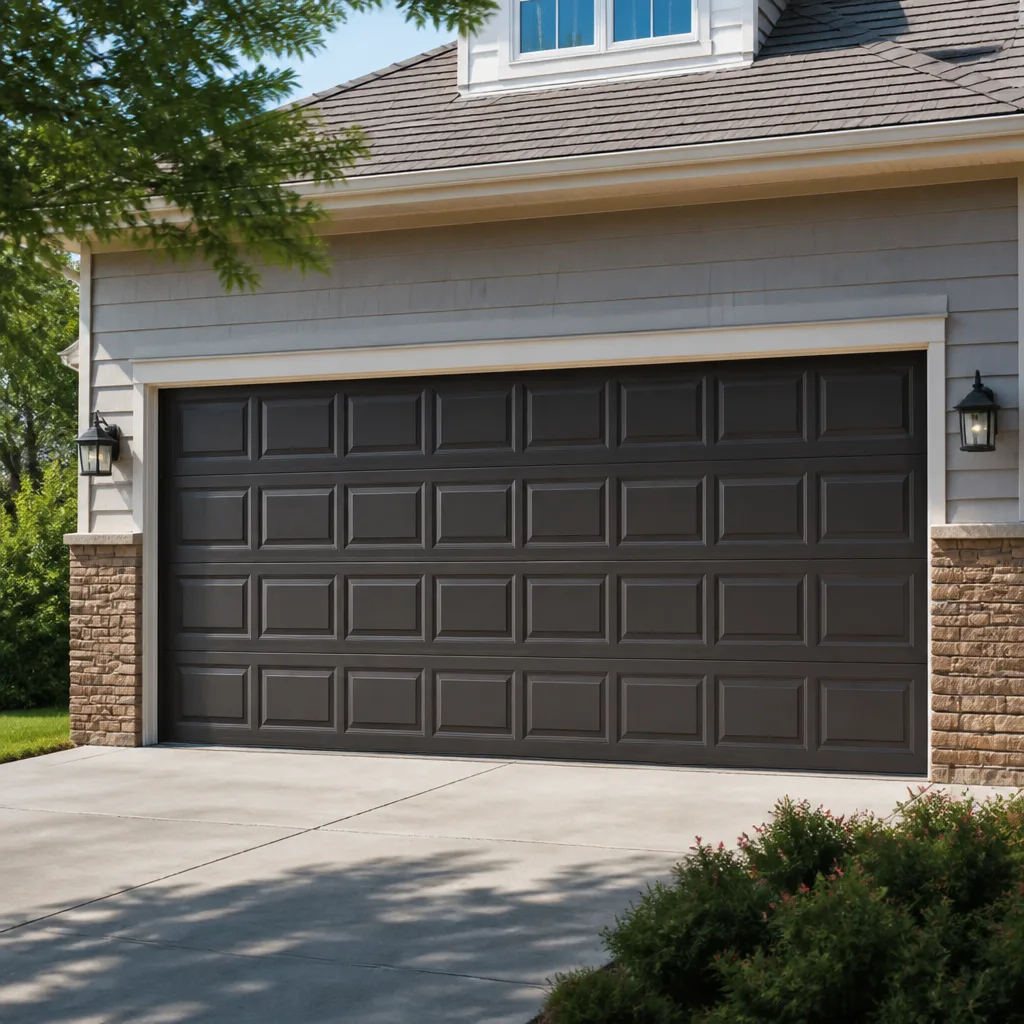
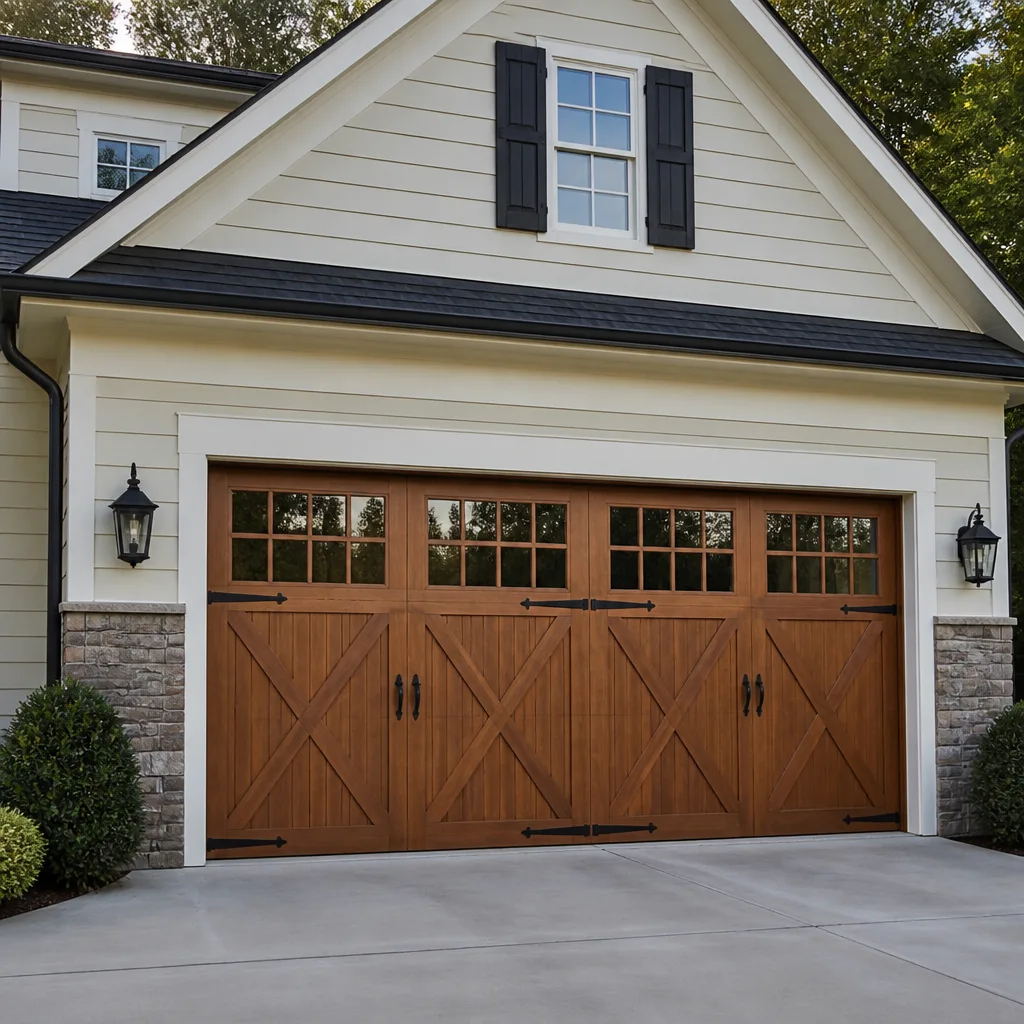
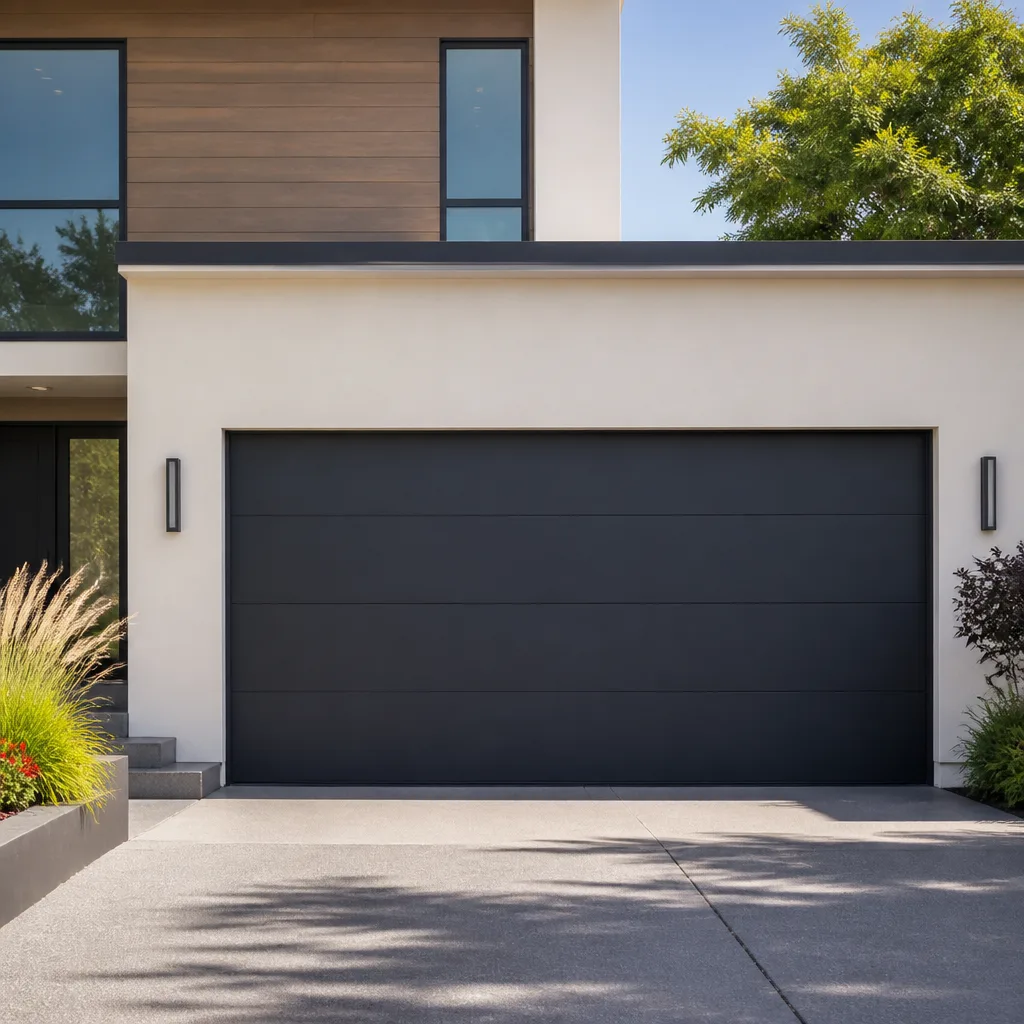
- Panel style drawing (raised panel, recessed panel, carriage house, flush)
- Window options and glass type if applicable
- Finish specification, including whether the color is from the manufacturer’s standard line or a custom match
Some communities go further. Telfair and Riverstone have specific rules about carriage-style over modern flush, wood-tone over painted steel, and window placement. First Colony neighborhoods vary by village; the older sections have looser standards than the newer additions. The approval process typically takes two to four weeks, so plan ahead. Nothing stalls a garage door project faster than buying an $3,000 door that the architectural committee rejects because the panel profile doesn’t match the neighborhood character.
Here’s the sequence we recommend:
- Pull your HOA’s architectural guidelines first. If you don’t have a copy, request one from your management company.
- Shortlist two or three compliant doors that match the approved colors and styles.
- Get written estimates for each option from a local company that has worked in your specific community before.
- Submit the full package with all required attachments. Incomplete submittals get bounced and the clock restarts.
- Order only after approval is in writing. Verbal promises from a board member are not approval.
If this process sounds tedious, that’s because it is, but it’s not optional. A door installed without HOA approval in Sugar Land’s master-planned communities can trigger a demand letter, a fine, and in worst cases, an order to remove and replace the door at your expense. We’d rather help you submit a clean application the first time. For an overview of what’s involved from measure to final inspection, visit our Garage Door Installation in Sugar Land page.
Steel Gauge, Insulation, and Finishes That Survive Humidity
Sugar Land humidity runs above 70% for most of the year, and the air carries Gulf salt and industrial particulates from the Houston corridor. That combination eats cheap garage door hardware. We see it every week: a five-year-old door with rust blooming at the bottom panel, hinges that creak because the zinc plating has failed, and a finish that’s chalky and peeling. It’s almost always a door built to a price, not a spec.
Here’s what actually holds up:
- Steel gauge: 24-gauge minimum, 25-gauge absolute floor. Lower numbers mean thicker steel. A 26-gauge door dents if you look at it wrong. A 24-gauge door takes a knock from a bike handlebar and shrugs. For a door that faces a west or south exposure, or a driveway where kids play basketball, step up to 24-gauge.
- Insulation: R-12 to R-18. If your garage is attached, an insulated door keeps your home’s thermal envelope intact. Sugar Land summers push garage temperatures past 100°F. An uninsulated steel door turns your garage into an oven and radiates heat into any room above or beside it. Polystyrene (R-6 to R-9) is a step up from nothing. Polyurethane (R-12 to R-18) is what we recommend for attached garages and any garage used as a workshop or gym.
- Finish: high-gloss or semi-gloss baked enamel over a proper primer. For coastal humidity, look for a factory-applied, oven-baked finish with a rust-through warranty. Clopay’s Standard Plus and Amarr’s Steel coating both hold up; Wayne Dalton’s paint process is also solid. Avoid raw steel doors painted on site. The edges and back side will rust before the warranty expires.
- Hardware: rust-resistant hinges, rollers, and brackets. Nylon rollers with sealed bearings run quieter and survive humidity longer than steel rollers. Galvanized or stainless hinges last years longer than uncoated hardware.
One more thing specific to this area: the bottom seal. It’s the first line of defense against our heavy spring and fall rains. Replace it when it gets hard, cracked, or fails to make full contact with the slab. A $40 seal can prevent $4,000 in water damage to a finished garage.
Why a Dallas Door Spec Fails in Sugar Land
A door that works beautifully 300 miles north in Dallas or Fort Worth may be the wrong call here. The climates are only superficially similar. Texas is big enough to contain multiple climate bands, and Sugar Land sits in the upper Gulf Coast band, where humidity, rainfall, and wind regimes are categorically different.
Here’s the comparison that matters:
- Wind. Dallas sees thunderstorms and occasional straight-line winds. Sugar Land sees sustained tropical storm winds and hurricane-force gusts every few years. A door without a coastal wind rating is a liability here and a non-issue in Dallas.
- Humidity. Dallas averages about 60% humidity; Sugar Land averages over 70%. Coatings and hardware that pass in North Texas corrode here. Rust-through warranties from manufacturers are geographically tiered for this exact reason.
- Soil. North Texas sits on expansive clay too, but with far less rainfall than Fort Bend County. Our soil cycles through wet and dry more dramatically, which means more foundation movement and more doors out of alignment.
- Sun exposure. Sugar Land’s southern latitude means more direct UV on west- and south-facing doors. Dark colors absorb more heat, which accelerates panel warping and finish degradation. A dark brown door that looks fine in Dallas may fade and warp in Sugar Land within three summers.
The practical takeaway: buy for the Gulf Coast, not for “Texas” as a general category. Look for doors marketed as hurricane-rated or wind-rated, specify polyester or similar UV-stable finishes, and choose insulation levels that handle 95-degree summer days with 75% humidity. If a national retailer’s website doesn’t ask for your zip code before showing you a door, the spec is probably generic. A Otto’s Garage Door home page explains how we have been helping Sugar Land homeowners make these exact calls since 2004.
What Garage Door Work Actually Costs in Fort Bend County
Here are real numbers from the Sugar Land market. These are the ranges we quote and the prices our customers tell us they paid elsewhere before finding us.
- Single steel door, basic (non-insulated): $1,200 to $2,200 installed
- Single steel door, insulated, wind-rated: $2,200 to $3,500 installed
- Double steel door, insulated, wind-rated: $2,800 to $4,500 installed
- Custom carriage-house style, wood or steel composite: $4,000 to $8,000+ installed
- Torsion spring replacement (single spring): $180 to $350
- Torsion spring replacement (both springs): $300 to $600
- Garage door opener replacement: $400 to $700 including labor for a belt-drive LiftMaster or Chamberlain
- Track alignment and door re-balance: $150 to $350
- Bottom seal replacement: $60 to $120
- HOA submittal assistance: included with most full-door installations from local companies
These are installed prices including labor. Anything significantly cheaper is usually a bait quote that grows at the door, a door with no wind rating, or a cash job with no warranty. The price should be quoted and agreed before any work starts, with a written guarantee. Not after the truck arrives. Not after the old door is on the ground.
For a more detailed look at repair-specific pricing, our Garage Door Repair in Sugar Land page breaks down every common job line by line.
The Maintenance Schedule That Doubles Door Life
A garage door in Sugar Land can last 20 to 25 years if you maintain it like you maintain your air conditioner or your roof. Skip the maintenance, and you’ll be replacing springs at year 6 and the whole door at year 12. Here’s the schedule we recommend for our climate:
- Every 3 months: Inspect the door visually. Look for rust spots, cracked weather seal, loose bolts, and any change in how the door sits in the frame.
- Every 6 months: Lubricate the rollers, hinges, and tracks with a white lithium or silicone spray. Do not use WD-40 as a lubricant; it attracts dust and gums up over time. Wipe down the tracks with a dry cloth. Check the balance.
- Once a year: Test the auto-reverse safety feature on your opener. Place a 2×4 on the ground where the door closes; it should reverse within two seconds of contact. Check the photo-eye sensors for alignment and cleanliness. Inspect cables for fraying. Tighten every bolt you can see.
- Every 2 to 3 years: Have a professional check spring tension and opener force settings. In our clay-soil climate, alignment should also be checked against the foundation’s current position.
- Before hurricane season (every May): Verify the wind load label is intact, check all reinforcement struts, and make sure the door seals tightly on all four sides.
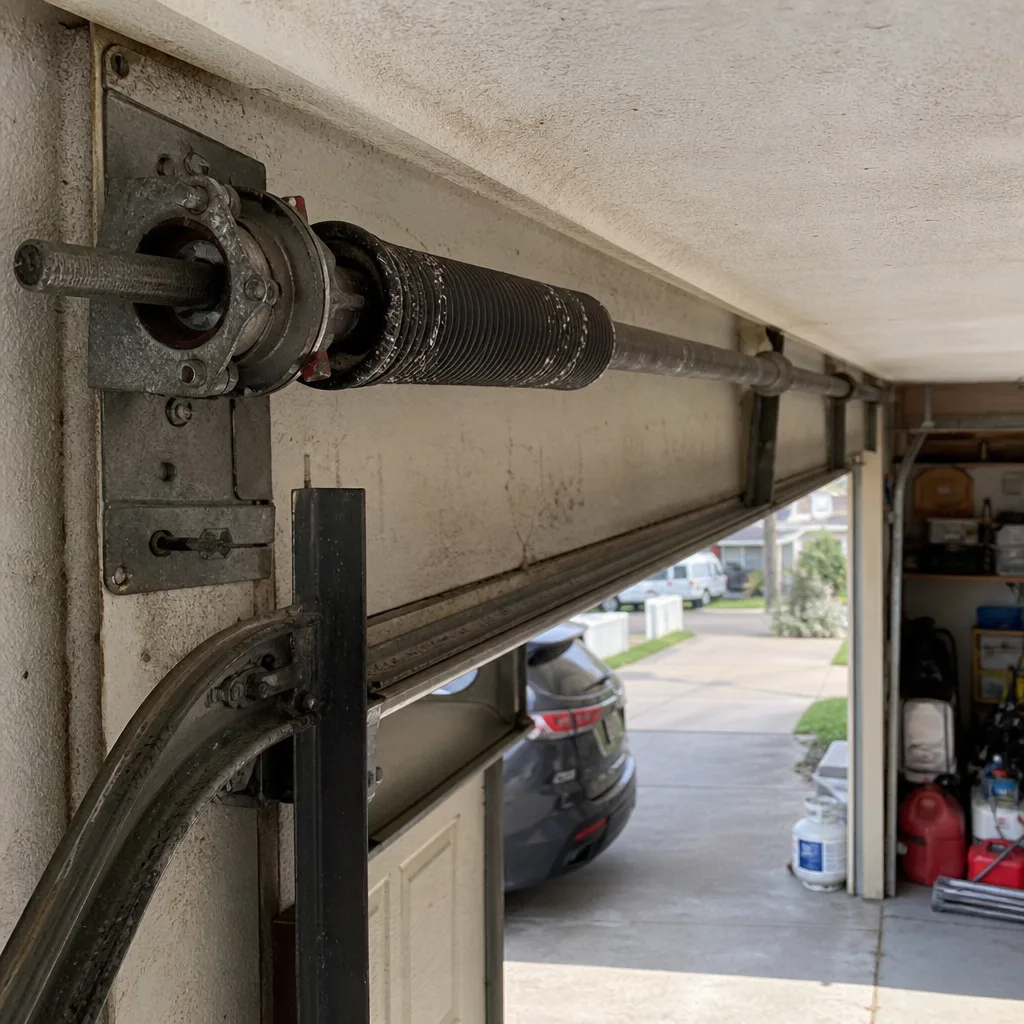
One note about springs: do not attempt to adjust, repair, or replace a torsion spring yourself. It holds several hundred pounds of counterbalance force. If it lets go while you’re working on it, it can cause serious injury. This is the one garage door component where “just watch a YouTube video” is genuinely dangerous advice. Call a pro-our DIY vs Professional Garage Door: The Sugar Land Homeowner’s Decision Guide explains why.
For a deeper look at how the opener fits into all this, see our Garage Door Opener in Sugar Land page.
Common Mistakes to Avoid
- Buying a door without checking the wind load rating. In Sugar Land, a door without a coastal wind rating is a door that fails in a storm. Always ask for the design pressure rating before you buy.
- Ignoring the HOA until after the door is installed. In First Colony, Telfair, or Riverstone, the architectural committee can and will make you remove a non-compliant door. Get written approval first.
- Choosing the cheapest spring. A $99 spring is usually rated for 5,000 to 7,000 cycles. That’s about three to five years of normal use in Sugar Land. A cycle-rated spring for $70 more will last 20,000 cycles and save you two service calls.
- Replacing the opener before checking the door balance. If the door is binding, a new opener will just strain against the same problem until it burns out. Balance and alignment first, opener second.
- Skipping insulation on an attached garage. An uninsulated steel door facing a Sugar Land summer turns your garage into a heat sink. The extra $300 to $600 for an insulated panel pays for itself in comfort and energy costs within a few years.
- Buying a door from a catalog without a local installation plan. We’ve seen too many homeowners order a door online, then discover that getting it installed, tuned, and HOA-compliant costs more than buying the door locally in the first place.
- Deferring maintenance until the door stops opening. By then, the damage is done. A $100 tune-up prevents a $600 spring replacement and a $3,000 door replacement.
When to Call a Professional
Call a professional when the spring breaks, when the door is visibly misaligned, when the cables have frayed strands, when the opener strains or smokes, or when your door fails an HOA inspection and needs a compliant replacement. Call a pro before hurricane season if your door predates current wind codes and you want a retrofit brace. Call a pro whenever you feel resistance from the door that wasn’t there before, because a garage door is a 200-pound object under spring tension, and a door that fights back is a door that can hurt someone. Otto’s Garage Door offers free estimates in Sugar Land, with a live person on the phone 24/7. Call (346) 484-4781 and ask for Otto, or his crew, and they’ll quote the job on the call and hold the number at the door.
Frequently Asked Questions
A typical installed garage door in Sugar Land runs $1,200 to $4,500 depending on size, insulation, wind rating, and style, with a quote agreed before work begins. Call (346) 484-4781 for an exact number on your specific door and opening, with no obligation and a free estimate.
Yes, in nearly all master-planned Sugar Land communities including First Colony, Telfair, Riverstone, and Greatwood, you need written HOA approval before replacing a garage door. Submit the manufacturer, model, color, and panel style, and wait for written sign-off before ordering anything.
Most of Sugar Land requires a garage door rated for 110 to 130 mph wind speeds, depending on your exact zip code and exposure category. Look for the wind load label on your current door and ask for the design pressure rating on any new door before you buy.
In most cases, yes, and Otto’s Garage Door answers the phone 24/7 with a live person who can schedule same-day repair in Sugar Land for broken springs, snapped cables, and off-track doors. Call (346) 484-4781 and ask what today’s schedule looks like.
In Sugar Land, expansive clay soil under your foundation swells and shrinks with seasonal rain and drought, which shifts the frame and throws the door out of alignment far more often than in drier Texas cities. The fix is track reinforcement and re-balancing, not necessarily a new door.
A standard spring in Sugar Land lasts about 7,000 to 10,000 cycles, which is roughly four to seven years of normal use, while a high-cycle spring rated for 20,000 cycles can push past a decade. Humidity and any door misalignment shorten that lifespan, so a spring replacement should always include a balance check.
The Bottom Line
A garage door in Sugar Land is not a box you pick off a website. It’s a wind-rated, clay-soil-adjusted, HOA-reviewed, humidity-hardened system that has to perform on the worst weather days our Gulf Coast climate can deliver. Buy for this zip code, not for generic Texas. Check the wind load label. Get HOA approval before you spend. Buy the thickest steel and best insulation your budget allows. Maintain it on a schedule. And if the spring snaps at nine at night, call a number where a live person answers, not a call center three states away. For more guides & resources, explore our blog, or call Otto’s Garage Door, which has been doing exactly that in Sugar Land since 2004.
Written by Otto Reinhardt, Owner at Otto’s Garage Door, serving Sugar Land since 2004.