
Last updated September 10, 2026
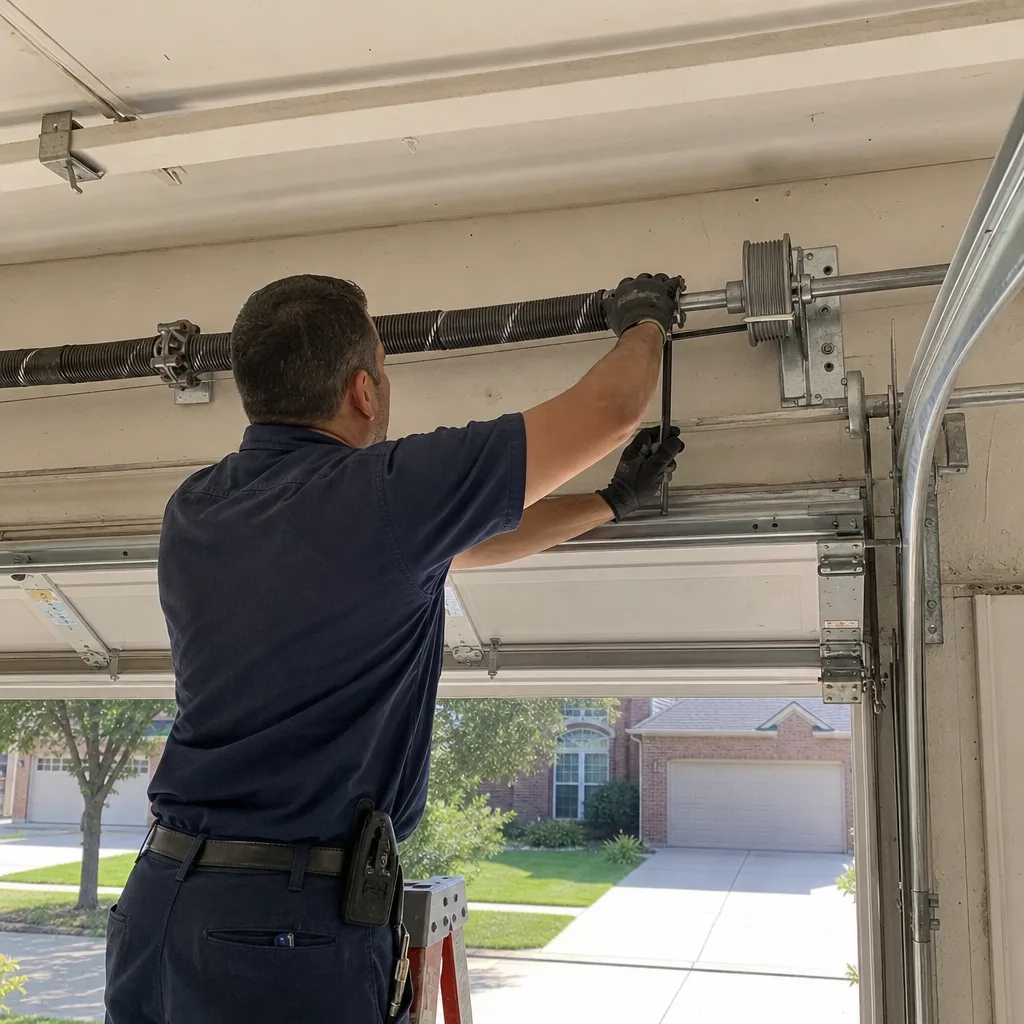
Full 25-point door and opener safety check with every visit - springs, cables, rollers, tracks, and your LiftMaster or Chamberlain opener included
You get a price before we start. It does not change when the truck arrives.
 Before
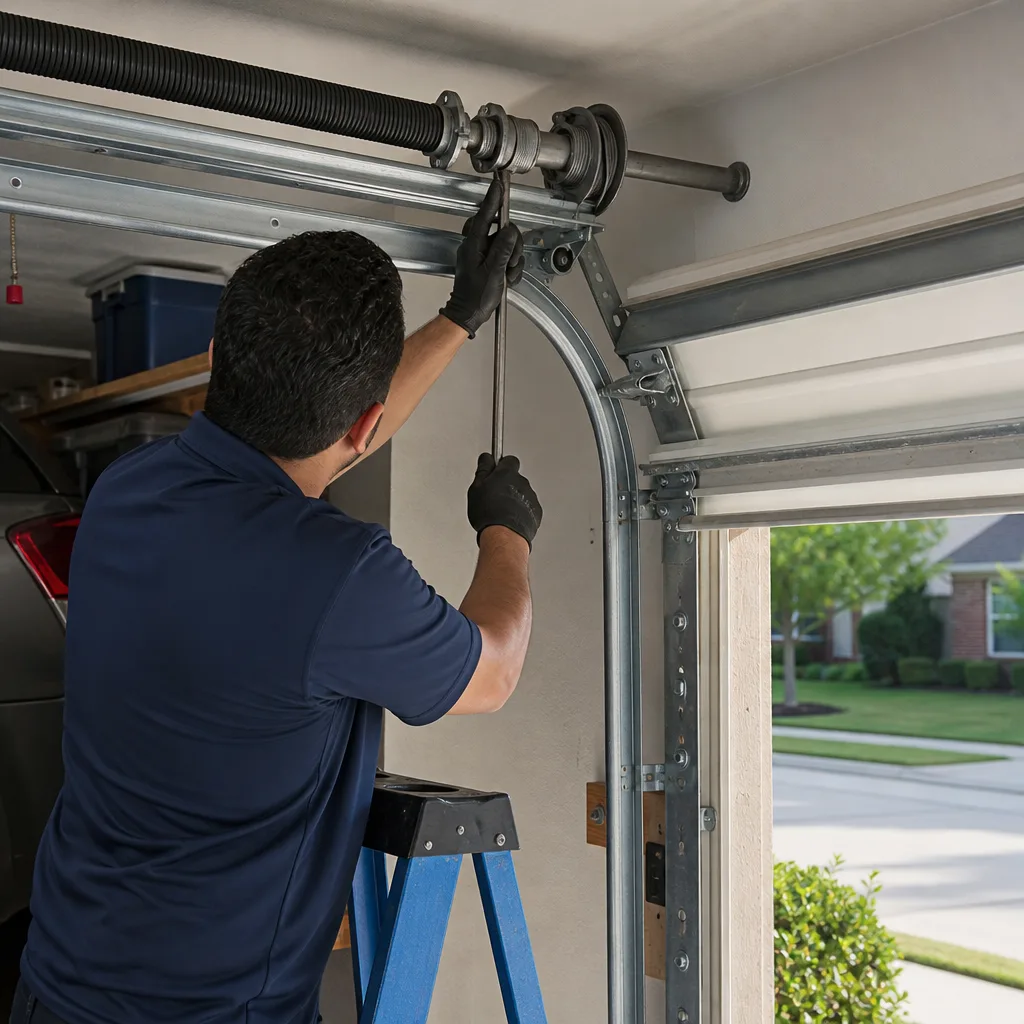 After
After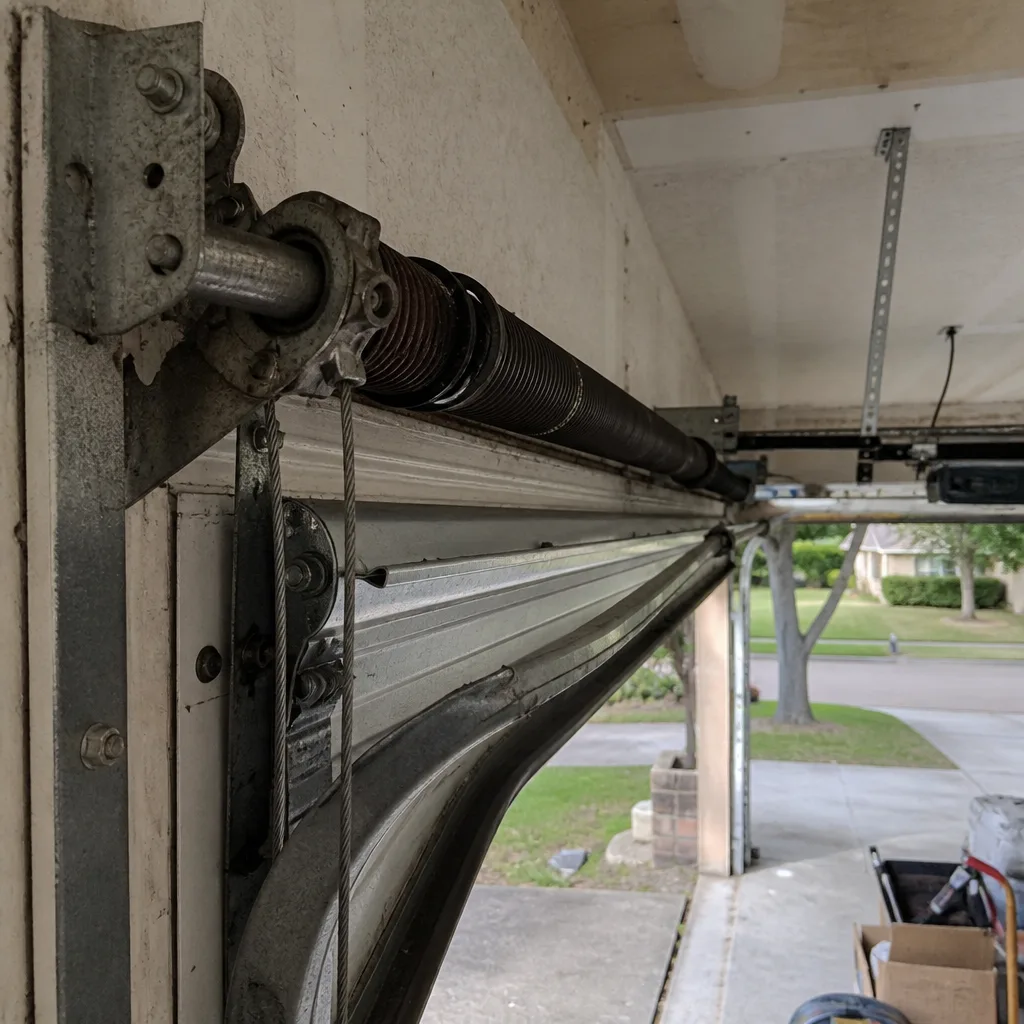 Before
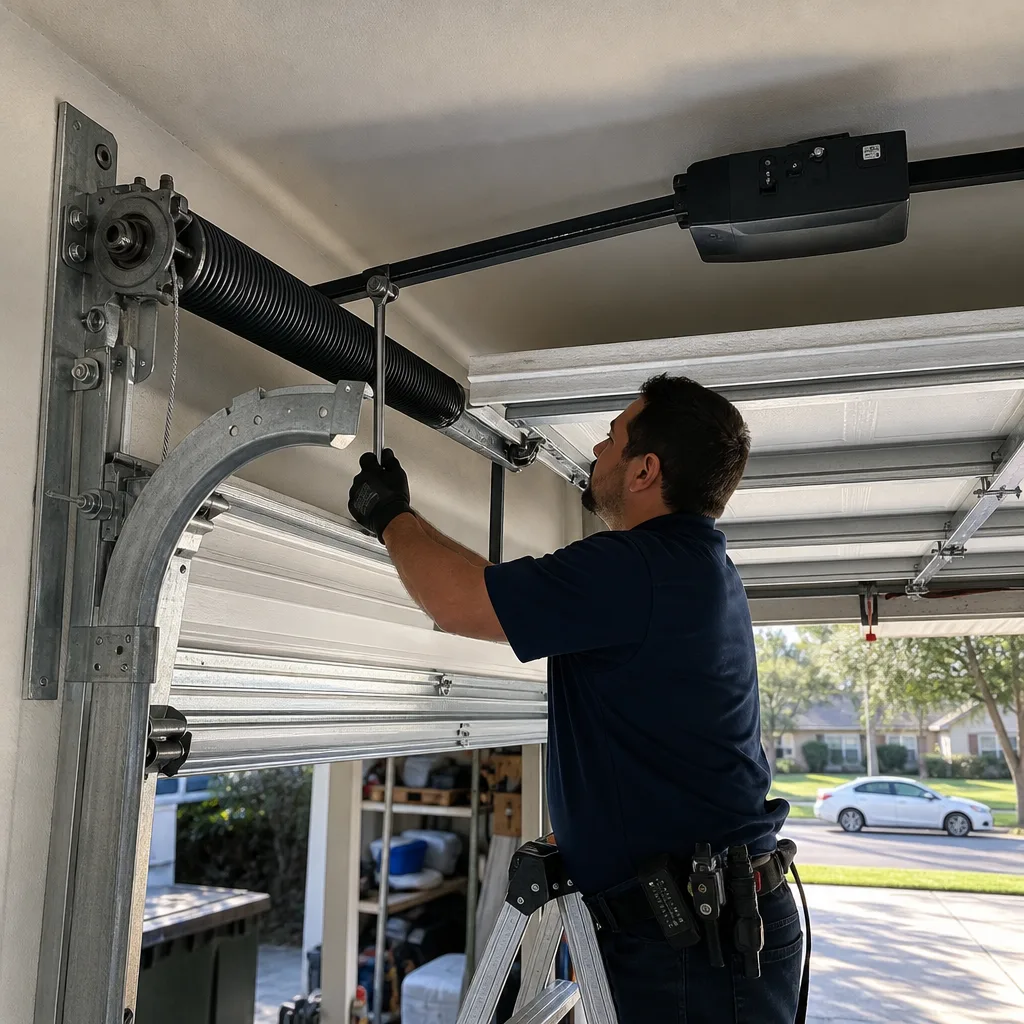 After
After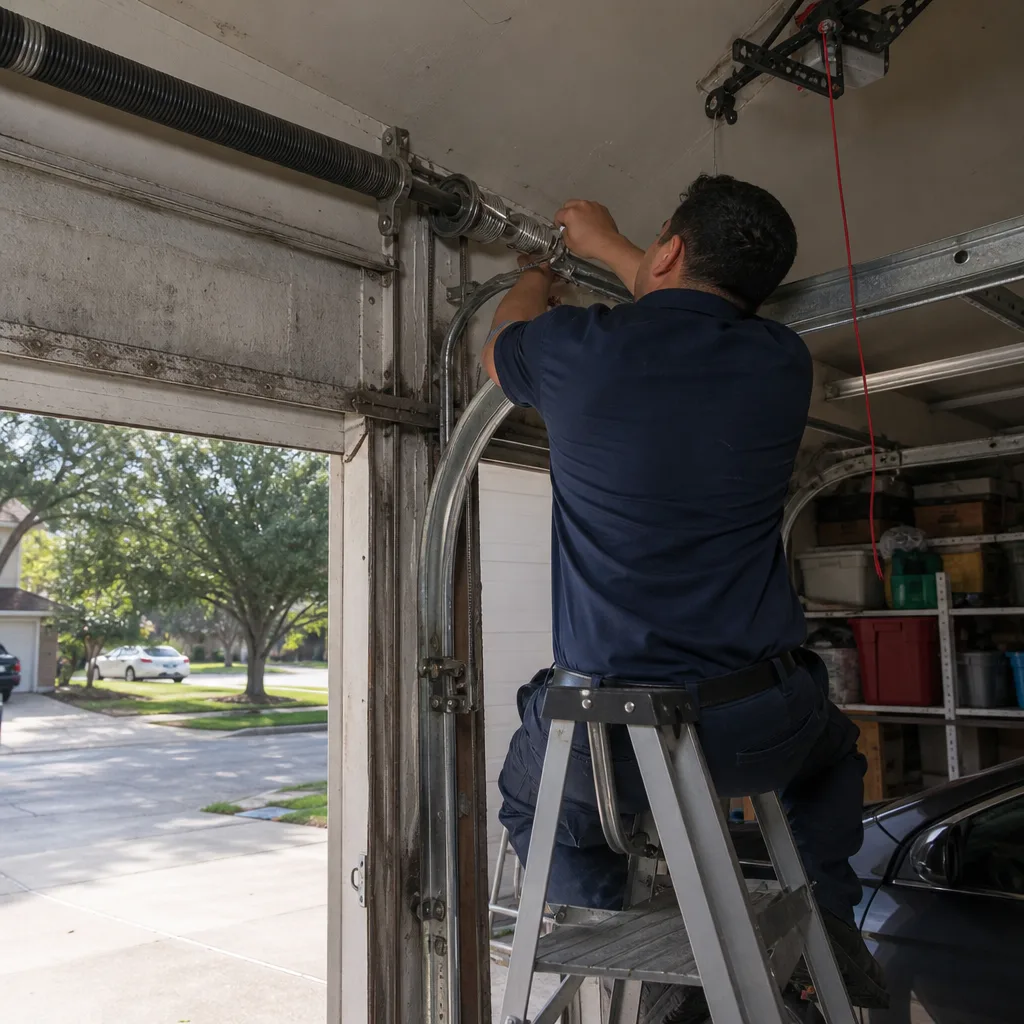 Before
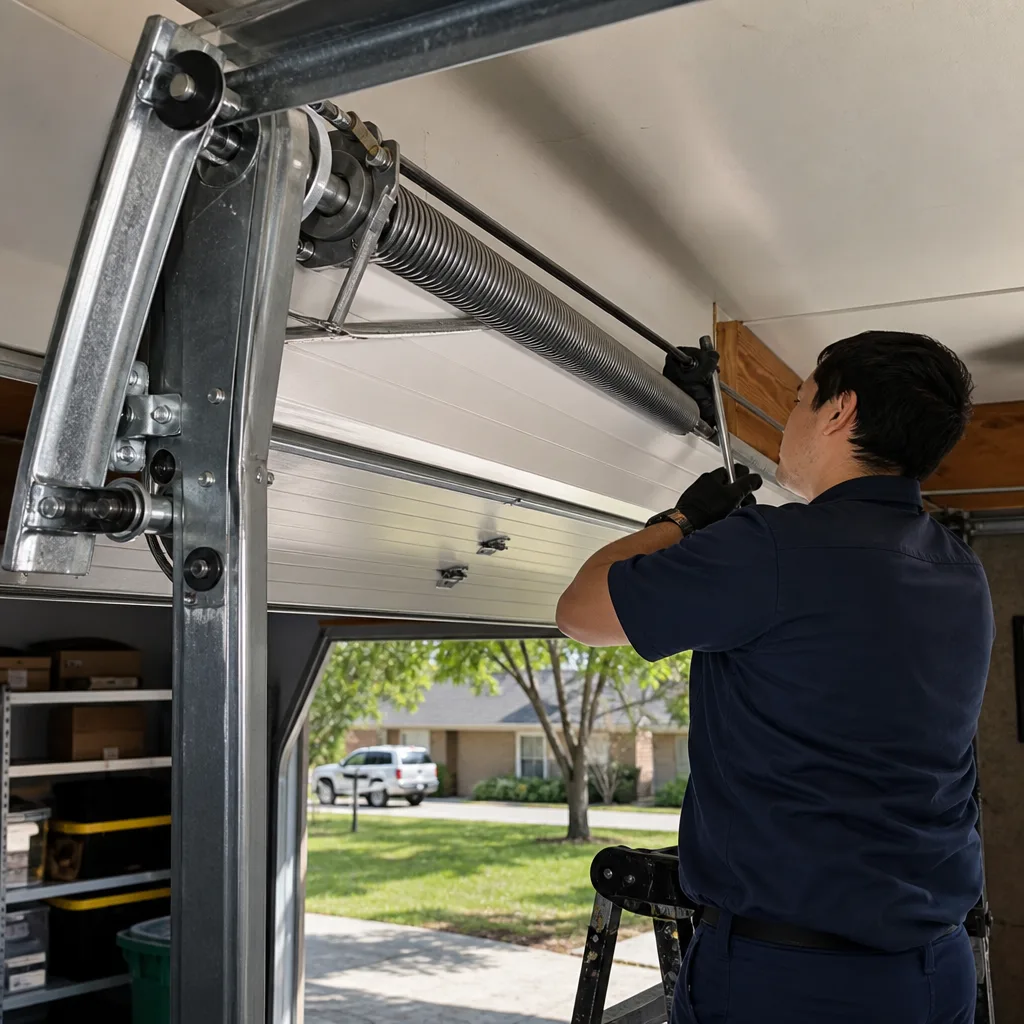 After
AfterSeasonal Garage Door Care for Sugar Land: Year-Round Homeowner’s Guide
Here’s something most garage door guides won’t tell you: the coldest week of the year in Sugar Land is responsible for more garage door calls to Otto than the entire month of August. That sounds backwards until you think about it. A door that’s spent six months baking in 95-degree humidity and thermal expansion settles into that condition. Then a 25-degree overnight freeze hits, metal contracts, and the spring that was quietly wearing out finally gives up at seven in the morning when you’re already late for work. This Complete Guide to Garage Door in Sugar Land throws out the spring-summer-fall-winter template that doesn’t fit Fort Bend County anyway. Sugar Land doesn’t have four seasons. We have two: hot and humid, and about to be hot and humid again, with a brief stretch of genuine cold that catches garage door hardware off guard every single year. Here’s how to care for your door on the calendar we actually live by.
Quick Answer
Seasonal garage door maintenance in Sugar Land means three things: pre-hurricane structural checks in April and May, heat and UV management on south-facing doors from June through September, and a freeze-prep service in December or January using lubricants that won’t thicken when the temperature drops. A homeowner can do the visual inspections themselves in about 20 minutes per season. The spring, cable, and track adjustments should be handled by a professional who works on Sugar Land doors year-round, as we discuss in our DIY vs Professional Garage Door guide for Sugar Land homeowners.
Table of Contents
- April to May: Pre-Hurricane Season Structural Checks
- June to September: Heat, Humidity, and UV Damage Control
- Why South-Facing Doors Take the Worst Punishment in Sugar Land
- December to January: The Freeze-Prep Window Nobody Plans For
- Post-Storm Inspection Protocol: What to Check After Wind and Rain
- Why “It Opens and Closes Fine” Is Not the Same as “It’s in Good Shape”
- When Age Catches Up: Sugar Land Door Life Expectancy
- Common Mistakes to Avoid
- When to Call a Professional
- Frequently Asked Questions
- The Bottom Line
April to May: Pre-Hurricane Season Structural Checks
Hurricane season officially starts June 1, but the prep window in Sugar Land is April and May. Once the first named storm forms in the Gulf, every hardware store in Fort Bend County sells out of the same few items and every Garage Door Repair in Sugar Land shop’s phone rings off the hook. Don’t be part of that scramble. The month of May is when you want to check the structural integrity of your door before wind load becomes a real concern.
Wind Load Hardware: What Actually Matters
A garage door is the largest moving object on your house, and in a hurricane it’s the single most common point of structural failure. When wind pushes against a 16-foot-wide door, the force transfers to the tracks, the hinges, and the jamb brackets. If any of those connections have worked loose over the past year, the door doesn’t just rattle. It can pull away from the wall and let the storm inside, and once the garage is breached, the roof is next. Sugar Land homes built after 2001 are required to have wind-rated doors, but the rating only works if the hardware is tight.
Here’s the pre-season checklist Otto runs on his own door every May:
- Check every hinge bolt and track bracket with a socket wrench. Vibration loosens them over time. A bolt that’s backed out a quarter inch is a failure waiting for 70 mph wind.
- Inspect the bottom rubber seal for cracks, gaps, or dry rot. Water intrusion during a tropical storm isn’t a nuisance. It’s how garage floors flood and stored belongings get ruined.
- Look at the track anchoring where the vertical track meets the wall. If you see daylight between the bracket and the wall, or if the lag bolts spin instead of tightening, the anchoring is compromised.
- Check the struts on the inside of each panel. These horizontal reinforcement bars are what keep the door from bowing under wind pressure. If a strut is bent or the screws are pulling out, the panel loses its wind rating.
- Run the door up and down three times, listening for any scraping, grinding, or popping. New noises in May mean the door won’t make it through a July storm.
One thing we see a lot in Sugar Land: the door was installed properly, the wind rating is legit, but the opener was added later and the mounting bracket is attached with drywall screws instead of lag bolts into the ceiling joist. A wind-rated door with a poorly mounted opener still fails, because the opener bracket rips free and takes part of the ceiling with it.
June to September: Heat, Humidity, and UV Damage Control
Summer in Sugar Land is not a maintenance challenge. It’s an endurance test for every component on your door. The combination of sustained high heat, near-total humidity, and direct sun exposure does three things: it degrades rubber seals, it stresses steel panels through thermal expansion, and it turns the inside of your garage into an oven that shortens the life of anything stored in there, including your opener’s circuit board.
What the Heat Actually Does to Your Door
Steel expands when it heats up. A 16-foot steel panel door can grow by a measurable fraction of an inch between morning and afternoon in August on Sugar Land’s west side. The door is designed for this. The hinges have play, the rollers ride in tracks with clearance. But when a door is already slightly out of balance, the expansion amplifies the problem. An unbalanced door that runs fine at 80 degrees will bind at 98 degrees because the expansion removes whatever clearance was left.
Here’s what to check during the hot months:
- Rubber bottom seal becomes soft and gummy. The seal on the bottom of the door is exposed to reflected heat from the driveway. It can exceed 130 degrees on a July afternoon in Sugar Land. A seal that’s started to deform leaves gaps that let in hot air, bugs, and during summer storms, water.
- Lubricant thins out. The grease on your torsion spring and the lubricant on your rollers lose viscosity in sustained heat. A door that starts squeaking in June is telling you the lubrication is gone and the metal is wearing against metal.
- Opener circuit boards cook. The garage itself can reach 120 degrees or more. Opener logic boards don’t love that. If your opener randomly stops responding on hot afternoons and works fine at night, heat is the likely culprit.
- Panel paint blisters and fades. UV exposure breaks down the factory finish on steel doors. Sugar Land’s sun is not kind to dark-colored doors, and once the finish is breached, the steel underneath starts to rust.
Why South-Facing Doors Take the Worst Punishment in Sugar Land
If your garage door faces south or southwest, everything above is worse for you. The sun beats on that door from late morning until sunset, every single day from May through September. We’ve measured south-facing door surfaces in Sugar Land at 140 degrees or higher in August. A north-facing door on the same street might top out at 105. That 35-degree difference is the difference between a paint job that lasts 10 years and one that starts peeling in five.
South-facing doors also experience more thermal cycling. The panel heats up during the day, cools down at night, and repeats that cycle 150 times each summer. That repeated expansion and contraction eventually fatigues the paint, the panel structure, and the adhesive that holds insulation to the inside of the door. If you have a south-facing door, inspect the panel surface for:
- Hairline cracks in the paint that run across the panel face, especially on dark colors.
- Rust spots starting anywhere the paint has chipped, usually near the bottom corners first.
- Separation at the panel joints where the factory seal between panels starts to pull apart.
- Warping or bowing visible when the door is closed and you sight down the face from the side.
A sunshield, awning, or even deliberate afternoon shade from a tree helps more than most people realize. If you’re shopping for a new door and your garage faces south, consider a lighter color, and ask about doors with better UV-resistant finishes. Otto has been helping Sugar Land homeowners with this decision since 2004, and he’ll tell you flat out: a dark brown south-facing door looks great for two years, and then it doesn’t. If you’re thinking about replacement, the team at Garage Door Installation in Sugar Land can walk you through the options that hold up under our sun.
December to January: The Freeze-Prep Window Nobody Plans For
Every year, the same phone call happens the morning after Sugar Land’s first hard freeze. A homeowner’s door won’t open, or it opens halfway and stops, or there’s a bang and the spring is in pieces on the floor of the garage. And every year, the root cause is the same: the door was set up for heat, not for cold.
Here’s what actually happens when a Sugar Land garage door confronts a freeze:
The lubricant thickens. Most garage door lubricants are chosen for hot climates. They’re designed to stay put at 140 degrees. But put that same grease through a 25-degree night and it turns thick and sticky. The rollers don’t roll. The spring binds. The opener strains against resistence it was never meant to overcome.
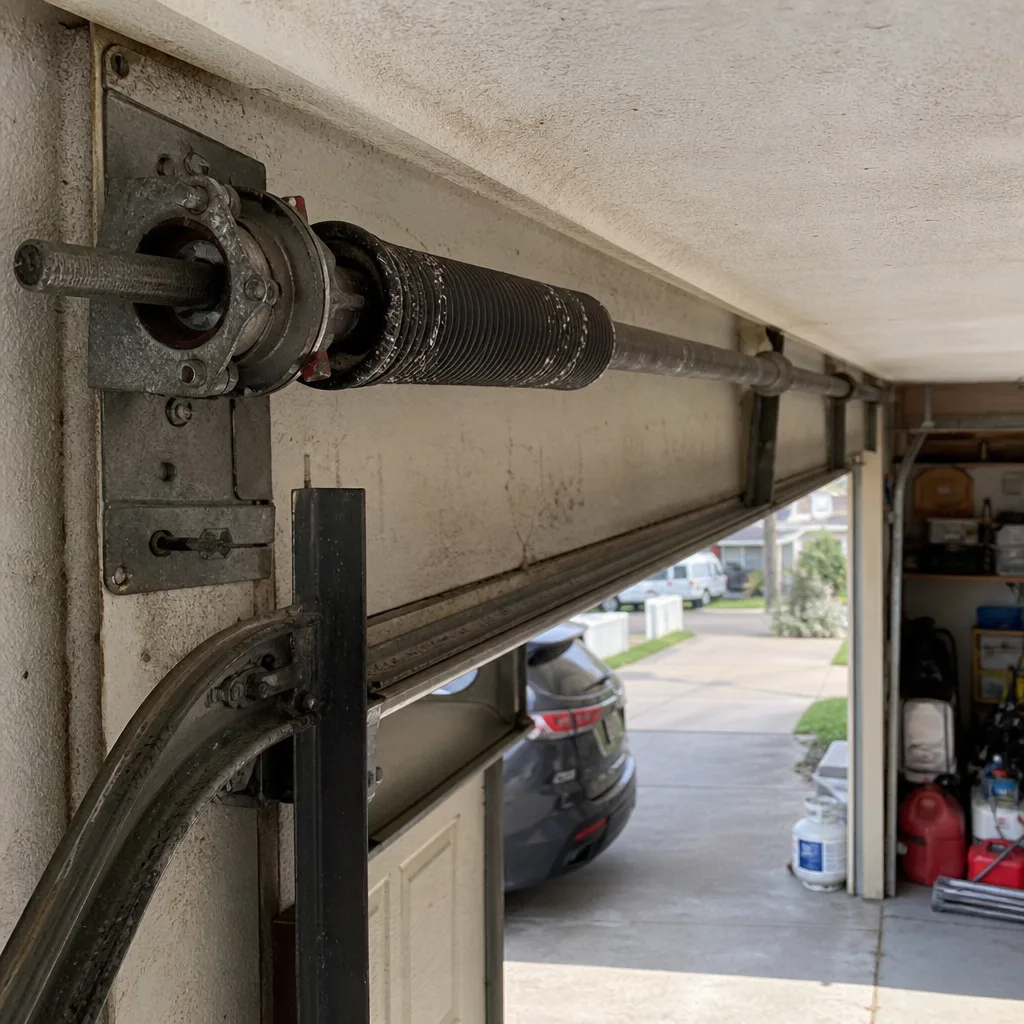
The spring contracts. Torsion springs lose flexibility as they cool. A spring that’s near the end of its cycle life is already weaker than factory spec. Cold makes it just brittle enough to snap under normal operating load on a freezing morning.
Weatherstripping hardens. The rubber bottom seal and the side weatherstripping lose their flexibility. If the door closes on a now-rigid seal, it can bind or leave a gap that lets freezing air straight into the garage.
For Sugar Land, the right lubricant choice matters. We don’t use the same grease spec here that shops in Michigan use, because we also need the lubricant to stay functional in July. What works in both directions is a synthetic lubricant rated for a wide temperature range. On torsion springs, a lighter synthetic that penetrates the coils without making a mess. On rollers, a dry silicone or Teflon spray that doesn’t attract Fort Bend County’s dust. If the last thing a previous owner put on your door was a heavy petroleum grease and it’s still sitting there, that’s a problem the first cold morning of the year.
The freeze-prep window here is December through January. Don’t wait for the forecast. Otto has been in this county since 2004, and he can tell you the exact week every year when the calls start. If your door is more than seven years old or you don’t know what lubricant is on the spring, a pre-freeze service visit now is cheaper than a spring replacement the morning of the freeze.
Post-Storm Inspection Protocol: What to Check After Wind and Rain
A tropical storm or hurricane doesn’t have to break your door to damage it. The post-storm period is when hidden problems start, and most homeowners never look because the door still opens and closes. That’s a costly miss.
After any sustained wind event in Sugar Land, run through this protocol. It takes ten minutes:
- Check the door’s balance manually. Pull the red emergency release cord and lift the door by hand. It should rise smoothly and stay put at the halfway point. If it drops, the spring lost tension, and a storm can do that through vibration alone.
- Inspect the full length of both tracks. Wind pressure can bow a track inward or outward by a fraction of an inch. You may not see the bend at a glance. Run the door up and watch the rollers pass through each track section, listening for pops or skips.
- Look at the top panel where the opener arm attaches. This is the most common post-storm failure point we see in Sugar Land. The opener arm gets yanked when wind pushes against the door, and the bracket tears the panel face. If you see cracks spidering out from the top bracket, that panel is compromised.
- Feel along the bottom seal for gaps. Driving rain can push the seal loose or dislodge it from the retainer track. A seal that’s half out lets water in every time it storms for the rest of the year.
- Run the opener and listen. A healthy door is quiet: a low hum from the motor, the soft rattle of rollers. Grinding, clunking, or a chatter that wasn’t there before the storm means something shifted and the door is now running out of alignment.
Sustained wind, even from a storm that never makes a direct hit on Sugar Land, can flex every connection on a garage door. The flex is invisible. The consequences are not.
Why “It Opens and Closes Fine” Is Not the Same as “It’s in Good Shape”
This is the most important concept in this whole guide, and it’s where Sugar Land homeowners lose the most money. A garage door that operates smoothly can still be slowly destroying itself. The damage you don’t notice in month one is the repair bill in month ten.
Here’s what “opens and closes fine” hides:
Worn spring cycles. Torsion springs are rated for a set number of cycles, and a cycle is one full open and one full close. The average Sugar Land family cycles their door three to five times a day. A standard 10,000-cycle spring lasts about seven years at that usage rate. But there’s no warning light. The spring looks exactly the same on day one and day 6,800. What changes is the door’s balance. A spring at 80 percent of its life doesn’t lift with the same force it did when new, and the opener starts doing more of the work. The opener’s motor doesn’t tell you it’s working harder until the day it burns out. Otto counts spring cycles the way you count tire miles, and he’ll tell you what’s left on yours if you ask.
Roller bearing wear. Nylon rollers spin on tiny ball bearings that wear out silently. By the time a roller is visibly wobbling, the bearing has been gone for months and the roller has been dragging against the track. That track wear is permanent. Replacing worn rollers before they scar the track saves you from replacing the track.
Water intrusion at the bottom panel. A bottom seal with a small gap lets rainwater wick into the bottom panel. Inside the panel, the steel starts to rust from the inside out. You don’t see it. The door keeps working. Then one day you notice the bottom panel is soft or flaking, and the repair is a panel replacement, not a seal replacement.
Opener strain from an unbalanced door. The opener is not designed to lift a 200-pound door by itself. It’s designed to move a balanced door. When the spring weakens and the door gets heavy, the opener’s rail, gears, and motor absorb the extra load. Opener replacements in Sugar Land are often the result of a spring that should have been replaced a year earlier.
If you’ve got a door that’s been working fine for years, that’s exactly when you should have it checked. The Otto’s Garage Door home service area covers all of Sugar Land, and a maintenance inspection catches the invisible stuff before it becomes a bill.
When Age Catches Up: Sugar Land Door Life Expectancy
Garage doors in Sugar Land have a shorter effective life than you might expect, and the climate is the reason. A steel door in a mild climate can last 20 years or more. In Fort Bend County, where nine months of heat and humidity meet near-total UV exposure, the realistic number is closer to 12 to 15 years for a door that’s properly maintained, and less for south-facing doors or doors that never got much attention. For a full breakdown of what drives these costs, see our Garage Door Cost Breakdown for Sugar Land homeowners.
Here’s the age breakdown Otto uses when a homeowner asks whether to repair or replace:
| Door Age | Typical Condition in Sugar Land | Recommendation |
|---|---|---|
| 0-5 years | Factory finish intact, spring cycles used but not depleted. | Maintain. Annual lubrication and balance check. |
| 5-10 years | Spring may be at 50-75% of cycle life, seals showing age, paint showing UV wear on south-facing doors. | Replace springs proactively, check all seals, consider repaint or finish treatment on exposed doors. |
| 10-15 years | Original spring likely near end of life, panels showing rust or fatigue, opener may be on its last legs. | Get a full inspection. Compare repair cost to replacement cost. Otto gives the numbers straight. |
| 15+ years | Door is beyond its designed service life in this climate. Panel rust, track wear, and opener failure are all on the table. | Replacement is usually the smarter money, especially if multiple components are failing. |
One more Sugar Land-specific note: if your door went through Hurricane Harvey and has been in service since before that storm, get it checked. A door that took a direct hit from sustained tropical winds in 2017 may have sustained structural fatigue that will show up years later. We’ve seen it.
Common Mistakes to Avoid
- Using WD-40 as spring lubricant. WD-40 is a solvent, not a lubricant. It will strip whatever protective coating is on the spring and then evaporate, leaving the metal drier than before. Use a proper synthetic garage door lubricant instead.
- Ignoring a slow door. A door that starts moving slower than it used to is telling you the spring is aging or the opener is straining. In Sugar Land’s heat, that strain compounds fast. Waiting until the door won’t open is how you turn a $200 spring into a $500 opener.
- Washing the door with a pressure washer. High-pressure water forces its way past the panel seals and into the insulation. It also drives water into the hinges and rollers. Use a garden hose and a soft brush, or better yet, a bucket and sponge.
- Adjusting the spring yourself. Torsion springs are under enough tension to seriously injure or kill you. This is not an exaggeration and not a joke. A door is 200 pounds riding on two springs. Respect it. If the spring needs adjustment, call someone who does it every day.
- Replacing the opener before checking the door balance. A new opener on top of an unbalanced door is a repeat failure waiting to happen. In our experience, most Sugar Land opener replacements that “failed again in two years” were never the opener’s fault. The spring was tired the whole time.
- Putting off the post-storm check. You don’t need to see damage the day after the storm. You need to find the damage before the next storm arrives. A loose track bracket or a cracked top panel doesn’t fix itself and it doesn’t stay the same size.
When to Call a Professional
Some things on this list are homeowner jobs. Lubricating the rollers, checking the bottom seal, and doing a visual inspection after a storm are all reasonable to do yourself with basic tools and common sense. But there are jobs on a garage door that carry real physical risk, and the spring is the obvious one. Any work involving the torsion spring, the lift cables, or the track mounting brackets should be handled by a trained professional who has the right tools and the right respect for the tension involved. If you notice your door is heavy to lift manually, if you see a gap in the spring coils, or if a cable is frayed or loose, stop using the door and call someone. Otto’s Garage Door offers free estimates in Sugar Land, and a live person answers the phone around the clock at (346) 484-4781.
If you need a second opinion on any written estimate from any company, we’ll give you one free inside the county. And if you served in the military or you’re over 65, we take 10 percent off everything, every time. That’s not a promotion. It’s how we’ve done business since 2004.
Frequently Asked Questions
A standard maintenance visit in Sugar Land typically runs $89 to $149 depending on what’s included, and that covers lubrication, balance testing, hardware tightening, and a safety inspection. If the technician finds a worn part, you’ll get the price for the repair before any work is done. Call (346) 484-4781 for an exact quote. Estimates are free.
Lubricate the rollers, hinges, and springs every six months, which for Sugar Land means once in the spring and once in the fall. Our climate is harder on lubricant than most, so don’t stretch the interval beyond that. Use a synthetic lubricant rated for a wide temperature range so it stays functional through both the freeze nights and the August heat.
You can handle the visual inspections, the lubrication of rollers and hinges, and checking the bottom seal on your own. You should not touch the torsion spring, the lift cables, or the track mounting brackets. Those components are under high tension, and mistakes there cause serious injuries. Call a professional for those.
Look for a synthetic silicone or Teflon-based spray for the rollers and hinges, and a synthetic spring lubricant that penetrates the spring coils without attracting dust. Avoid petroleum-based greases that thicken in the cold and WD-40 entirely. Otto recommends specific products based on what brand of door and spring you have, and he’ll tell you what to buy whether or not you’re a customer.
Yes, and specifically in this climate. The combination of heat cycling, humidity, and occasional freezes means components age faster here than in milder climates. A tune-up that catches a tired spring at 80 percent of its life turns an emergency into a scheduled repair. Most Sugar Land emergency calls Otto gets could have been avoided with a $100 maintenance visit three months earlier.
Yes. Otto’s Garage Door offers free estimates throughout Sugar Land and Fort Bend County, with no trip charge inside the county. Call (346) 484-4781 and a live person answers. Otto quotes the job on the call and holds that number when he shows up.
We work on all major brands including LiftMaster, Chamberlain, Genie, Clopay, and others. If you’ve got a brand we didn’t list, ask anyway. Parts availability is usually the only variable, and Otto knows the supply lines in Fort Bend County better than anyone.
For most standard opener replacements, yes. We carry common opener models and parts on the truck, and the Garage Door Opener in Sugar Land page has more detail. If you’ve got a specialty unit, Otto will tell you on the phone exactly when it can be done and what it will cost.
The Bottom Line
Seasonal garage door care in Sugar Land isn’t about following a national template. It’s about knowing what this climate does to a door: hurricane-season wind load, brutal summer heat and UV exposure, a late-December freeze that surprises everyone, and post-storm damage that hides until it’s expensive. The calendar here has three real maintenance seasons: May, July, and January. Hit those three windows with the checks in this guide, and your door will last years longer and break down far less often. Skip them, and you’ll meet the damage at the worst possible moment. That’s not a guess. It’s what we’ve seen since 2004, on thousands of Sugar Land doors, including our own.
Written by Otto Reinhardt, Owner at Otto’s Garage Door, serving Sugar Land since 2004.