
Last updated September 10, 2026
Full 25-point door and opener safety check with every visit - springs, cables, rollers, tracks, and your LiftMaster or Chamberlain opener included
You get a price before we start. It does not change when the truck arrives.
 Before
 After
After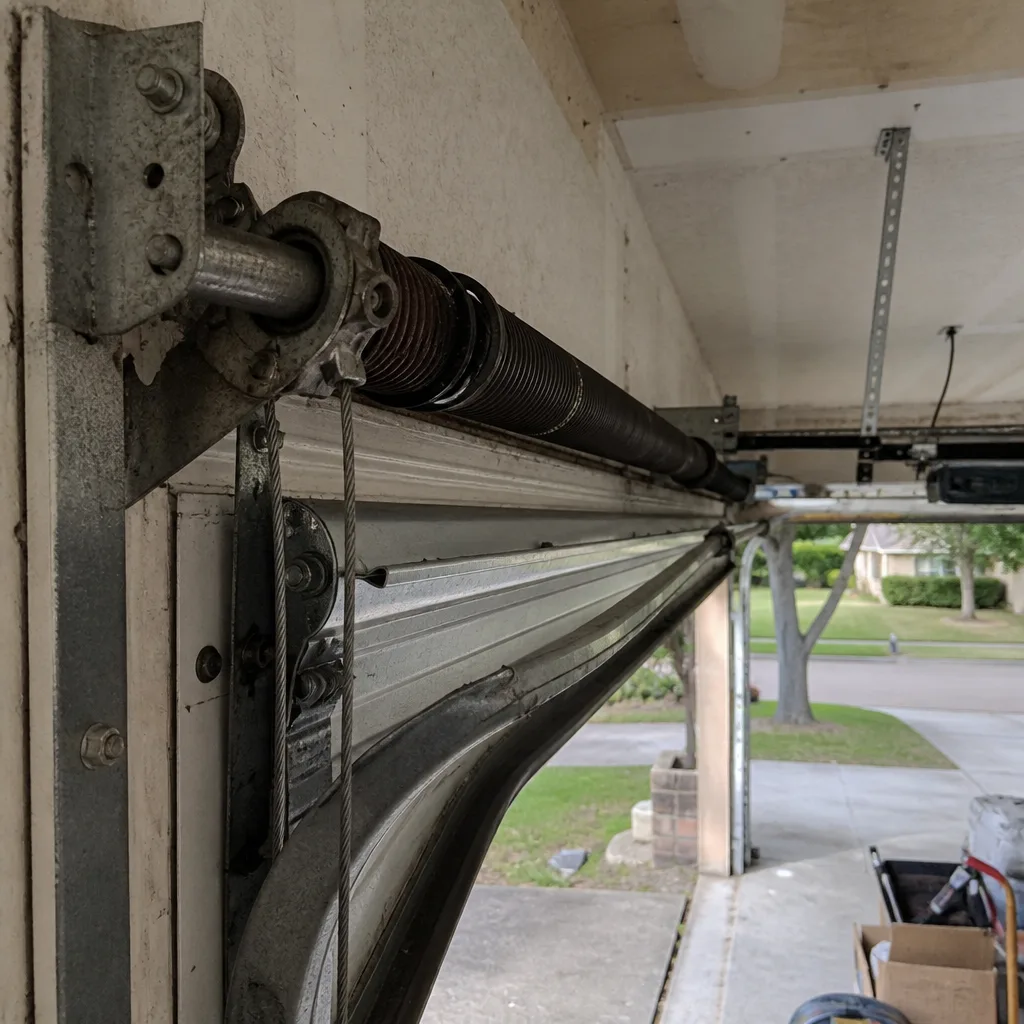 Before
 After
After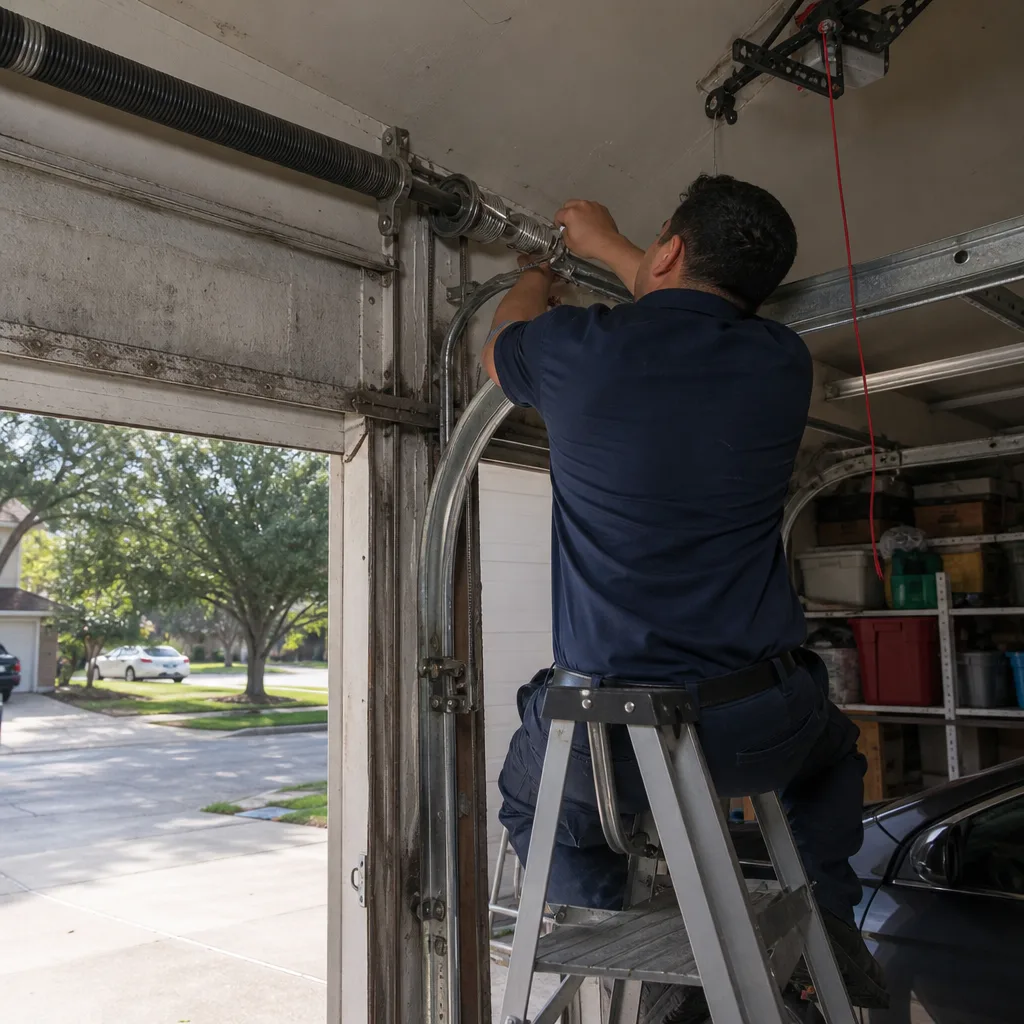 Before
 After
AfterGarage Door Warning Signs: A Sugar Land Homeowner’s Reference Guide
The number one thing homeowners say after an emergency call is “it was making that noise for months.” And almost every one of those calls happened at the worst possible time, because the problem didn’t feel urgent when the door was still working. Here’s the truth after 29 years of fixing doors across Sugar Land: your garage door tells you when it’s failing. It grinds, it pops, it shakes, it stalls. You just haven’t been given the translation. This guide gives it to you, plain and simple, so the next time your door talks, you’ll know whether to watch it or call someone before it quits on a Monday morning with your car trapped inside. For more, see our Complete Guide to Garage Door in Sugar Land.
Quick Answer
The most common garage door warning signs in Sugar Land are grinding, popping, or squealing sounds during operation, a door that rises unevenly or shakes, slow response time after pressing the button, and visible rust or fraying on the springs and cables. Grinding points to worn rollers or a failing opener gear; popping often means a torsion spring is about to break; squealing usually signals dry or failing bearings. If your door shakes, lurches, or hangs crooked, stop using it and call a professional, because those are spring and cable problems, not noise problems, and they get dangerous fast.
Table of Contents
- Sound-Based Diagnosis: Grinding vs. Popping vs. Squealing
- Movement Irregularities: Shaking, Lurching, Uneven Rising, Slow Response
- Visual Inspection Cues Sugar Land Homeowners Can Do From the Driveway
- Nuisance Symptom vs. Safety Risk: Know the Difference
- How Sugar Land’s Climate Accelerates Specific Failure Types
- Age-Based Warning Signs: What Your Door’s Years Are Telling You
- Opener Warning Signs: When the Motor Is the Messenger, Not the Problem
- Common Mistakes to Avoid
- When to Call a Professional
- Frequently Asked Questions
- The Bottom Line
Sound-Based Diagnosis: Grinding vs. Popping vs. Squealing
We’ve stood in hundreds of Sugar Land driveways and asked the same question: “When did the noise start?” Most people can’t remember. But almost everyone can describe the noise, and that description tells us exactly where to look before we ever touch the door. A garage door is 200 pounds riding on two springs, a set of rollers, an opener, and cables under constant tension. Each component fails with its own signature sound. Here’s the translation.
Grinding
Grinding is a metal-on-metal sound, like a rock caught in a machine. It usually means one of three things: worn rollers that are no longer turning, a failing opener gear, or a door that has shifted off its track and is scraping metal against metal. On LiftMaster and Craftsman openers, the plastic drive gear inside the motor housing wears down after years of use and grinds as it strips. If the grinding is coming from the opener itself, the gear is likely shot. If it’s coming from the sides of the door, it’s the rollers or the track. Grinding is a watch-it situation if it’s mild and only present in the last few inches of travel, but once it’s loud enough to hear over a running truck, it’s a fix-it-now.
Popping
Popping is the one sound that gets my full attention every time. A pop, bang, or loud snap during door operation is almost always a torsion spring breaking or a cable letting go under tension, and it’s the sound of stored energy releasing all at once. A torsion spring on a standard Sugar Land two-car door is wound to hold 90 to 120 pounds of torque. When it snaps, it’s a gunshot. If you hear a pop and the door won’t open, or one side drops, or the door suddenly feels dead heavy, the spring is gone. This is not a wait-and-see. This is a call me, because a door with one broken spring will overwork the remaining spring and, if the cable lets go, the door can fall.
Squealing
Squealing is high-pitched, persistent, and usually gets worse in cold weather or after rain. It points to dry bearings in the rollers or the hinges, a dry torsion spring, or a failing opener belt. Sometimes a little lubrication quiets it, but squealing after lubrication tells you the bearing surfaces inside the rollers are worn to the point of metal shaving against metal. In Sugar Land, rollers wear out faster than in drier climates because humidity works into the bearings and flash-rusts the internal races. A squeal that comes back within a few weeks of lube is a roller replacement indicator, not a maintenance issue.
Movement Irregularities: Shaking, Lurching, Uneven Rising, Slow Response
A healthy garage door moves like a single solid panel, smooth from the bottom seal to the top section. When that motion changes, the door is compensating for something. Sugar Land homeowners tend to notice these changes in the morning, when the door is cold, or after a storm, when humidity has changed the fit of the wood or the tension in the springs.
Shaking
Shaking, vibrating, or chattering as the door moves usually means the door is out of balance, the rollers are worn, or a hinge or track bolt has loosened. The door transfers its imbalance to the opener rail, and the opener fights it. Continued shaking wears out the opener gear prematurely and loosens hardware along the entire track assembly. If the door shakes on the way up but not down, it’s often a spring tension issue. If it shakes in both directions, look to the rollers and hinges first.
Lurching
Lurching, where the door pauses and then jerks forward, is typically a track obstruction, a failing spring losing tension unevenly, or a damaged panel binding against the weatherstripping. It catches at one point in the travel, drags, and then jumps free. Lurching is hard on the opener and even harder on the hinges. It’s a fix-it-now situation because the catching point is a stress fracture waiting to happen.
Uneven Rising
If one side of the door starts moving before the other, or the door sits visibly crooked when partway up, you have a spring problem or a cable problem. On a properly balanced door, both torsion springs work as a matched pair. When one breaks or loses tension, the door twists and binds. A door that rises unevenly is a safety risk. Never straighten or level it by hand. The weight distribution is no longer what the cables were built to hold, and a cable under unequal load can snap, causing the door to come down hard and fast.
Slow Response
Slow response means a delay of more than two or three seconds between pressing the button and the door beginning to move. Common causes are a dying opener logic board, cold solder joints (rare on newer units but common in humid climates), misaligned photo-eye sensors, or a spring that has lost so much tension the opener struggles to lift the dead weight. In Sugar Land, we see a lot of sensor misalignment after heavy rain, when the ground shifts under the concrete slab and knocks the sensor out of alignment by a fraction of an inch.
Visual Inspection Cues Sugar Land Homeowners Can Do From the Driveway
You don’t need any tools to catch the visual signs of a failing garage door, and you can do this check in under five minutes. We do these same checks on every garage door repair in Sugar Land we’re called out to, and you can learn what we look for from the ground, without touching anything under tension.
Step 1: Stand Back and Look at the Door Closed
The door should be flush with the opening at the bottom and even along the top. Look for daylight under one side of the weather seal, gaps between the door and the frame, or a slight twist in the panel alignment. A visible gap means the door is no longer sitting straight, and that’s a warning sign of track damage or spring wear.
Step 2: Examine the Torsion Springs
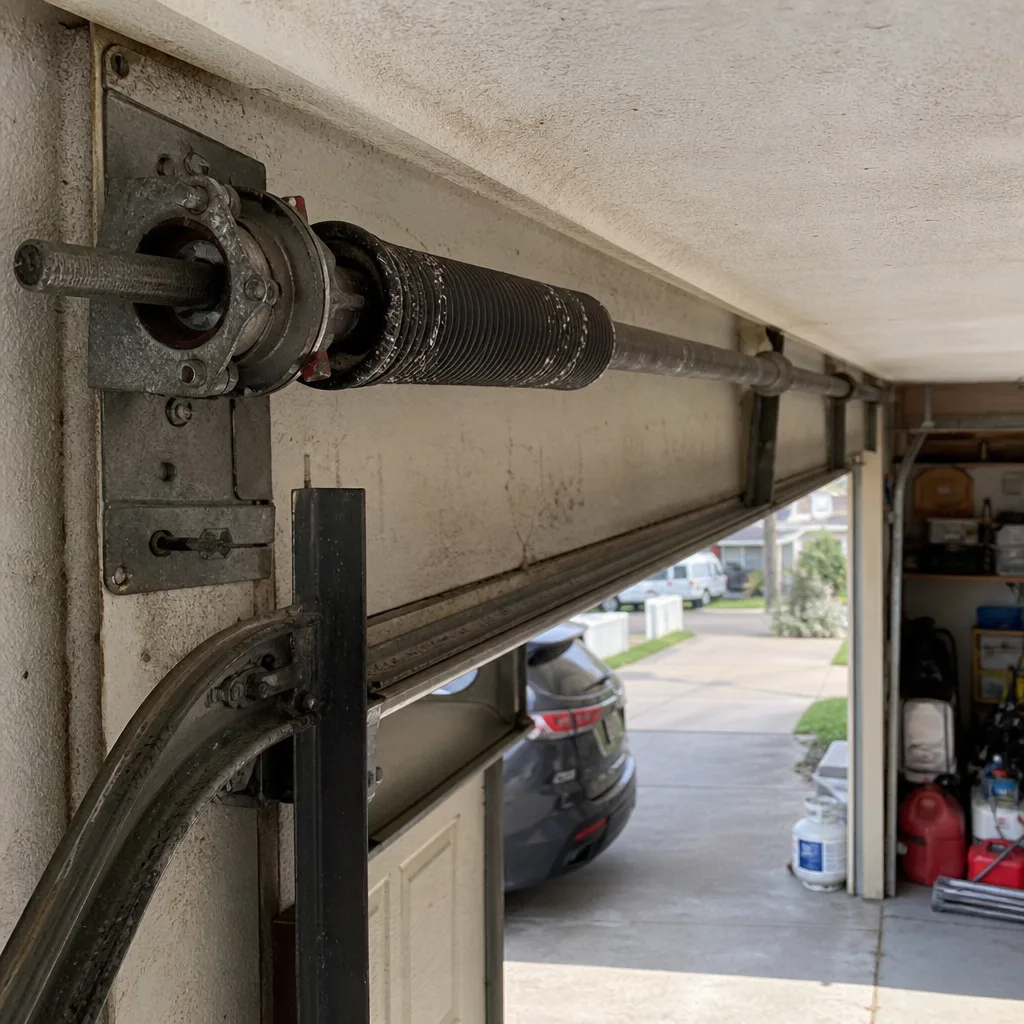
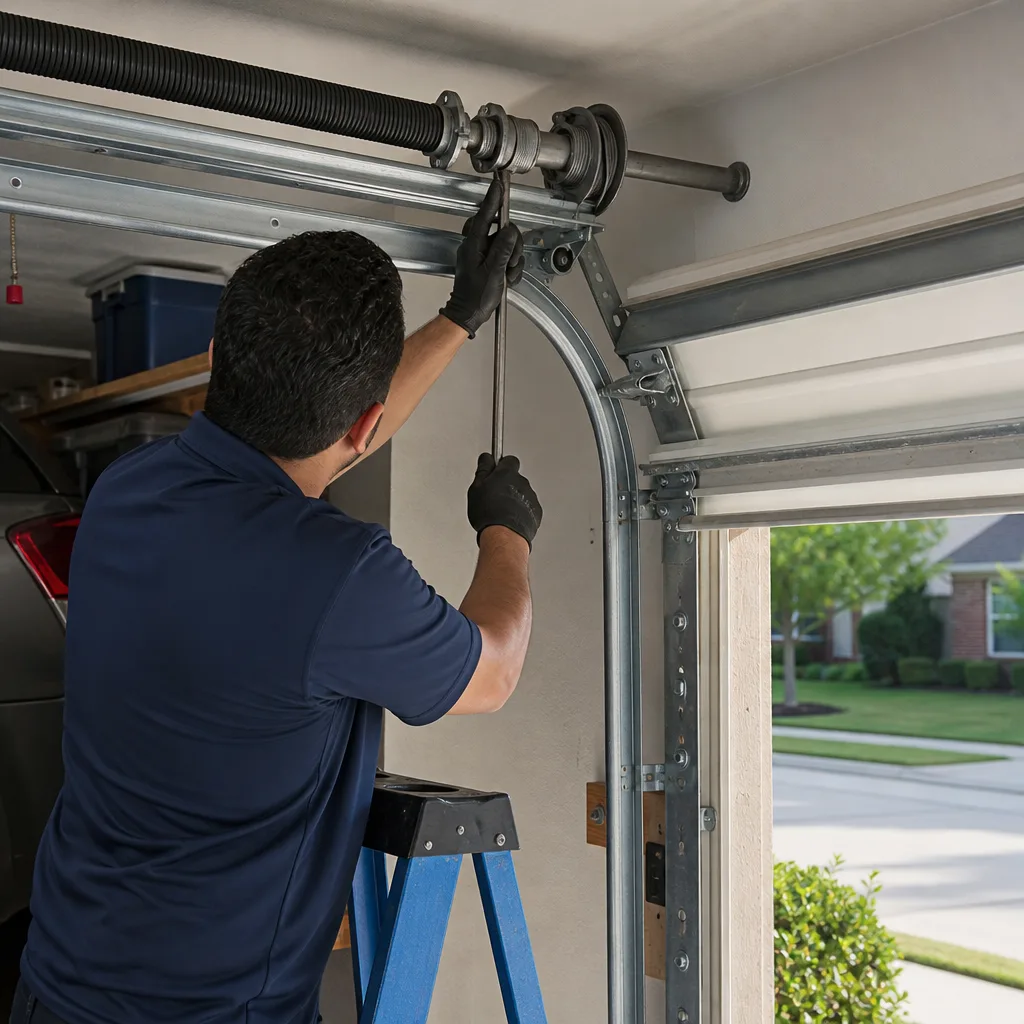
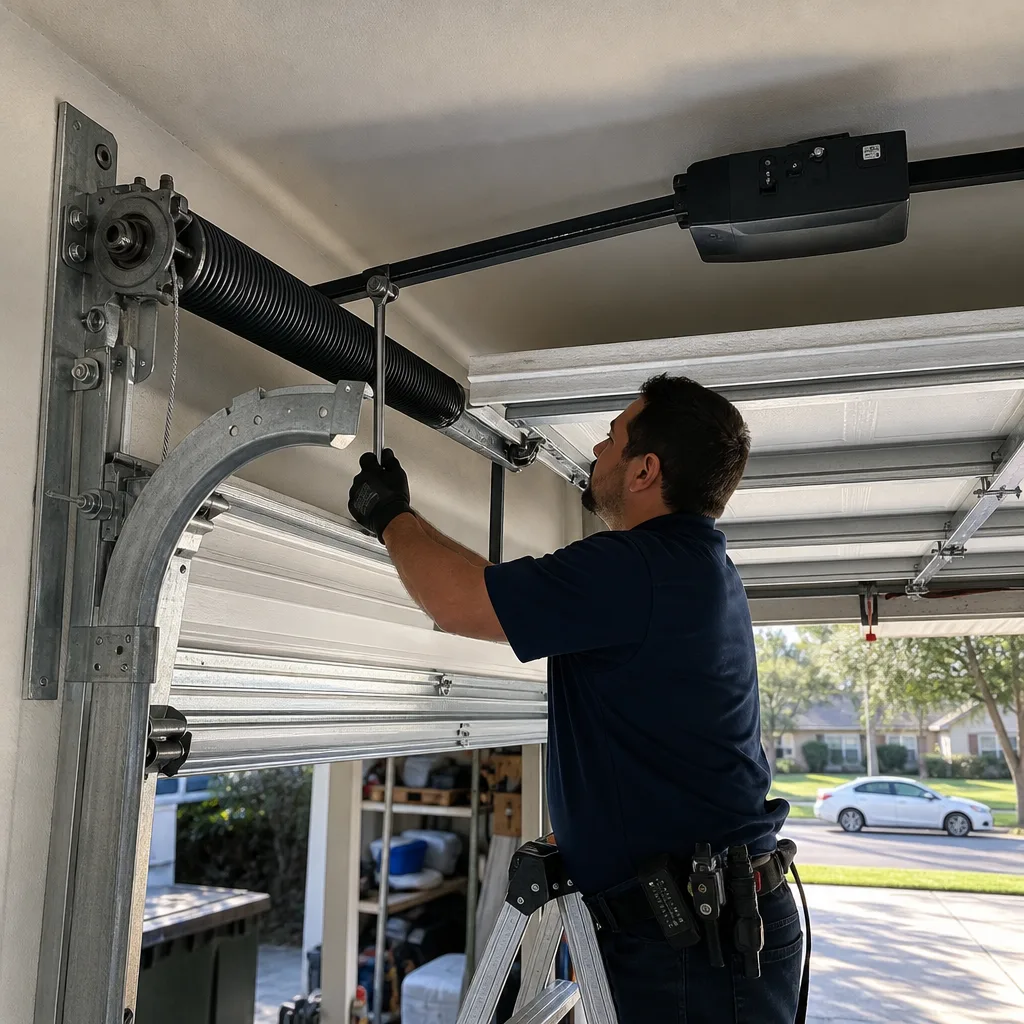
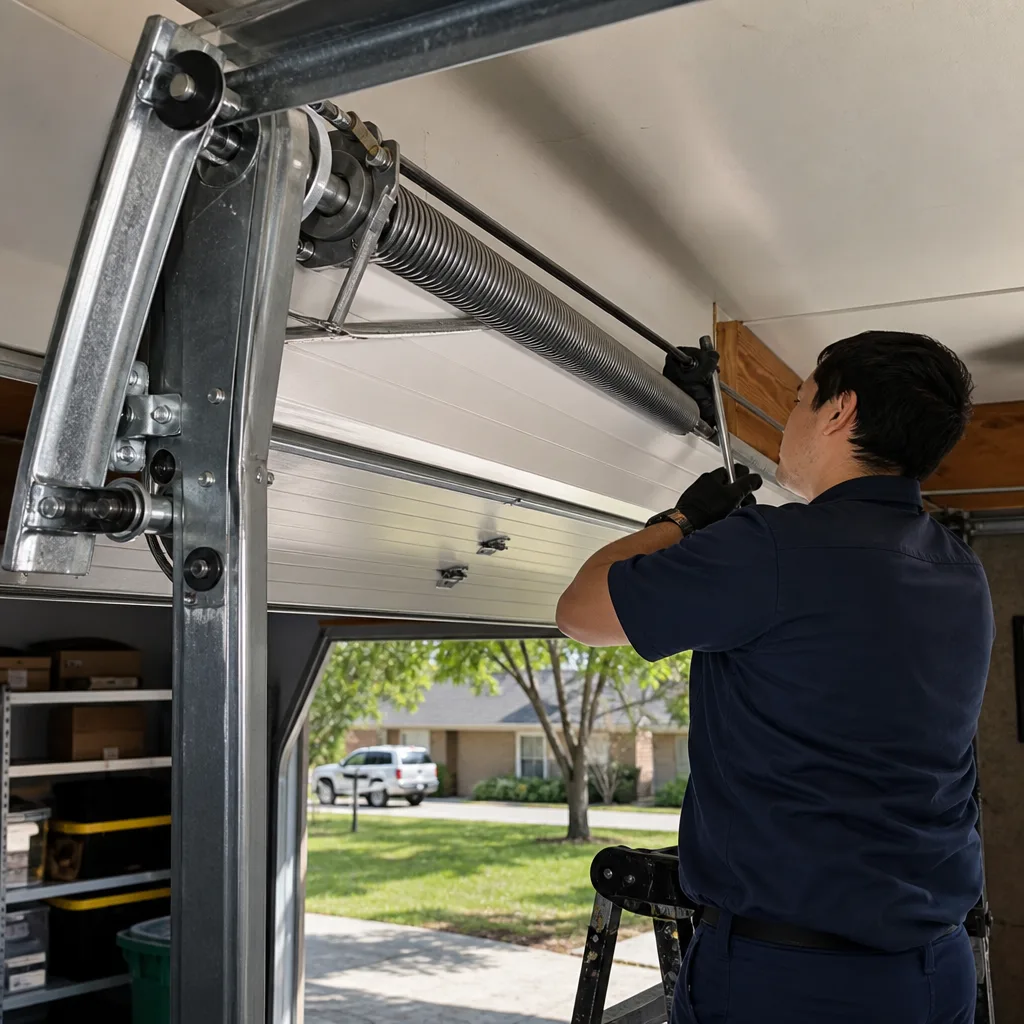
Look above the door, where the big spring or springs are mounted on the header. A spring in good condition is tightly wound with no visible gap between coils. A spring that has broken will have a visible gap, usually about two inches wide, and the ends of the break are rough. If you see one spring with a gap and one intact, that’s a red flag. Do not attempt to measure, adjust, or replace the spring yourself. Torsion springs store enough energy to break bones, and the risk is not worth it.
Step 3: Check the Cables
The cables run along both sides of the door, from the bottom bracket to the drum above. You’re looking for rust streaks, which indicate the cable is corroding from the inside out, and for any sign of fraying, which looks like fine steel wool separating from the main cable strand. A frayed cable is a snapped cable waiting to happen, and a snapped cable means the door’s weight stops being distributed evenly. That’s a professional call, today if possible.
Step 4: Look at the Rollers and Hinges
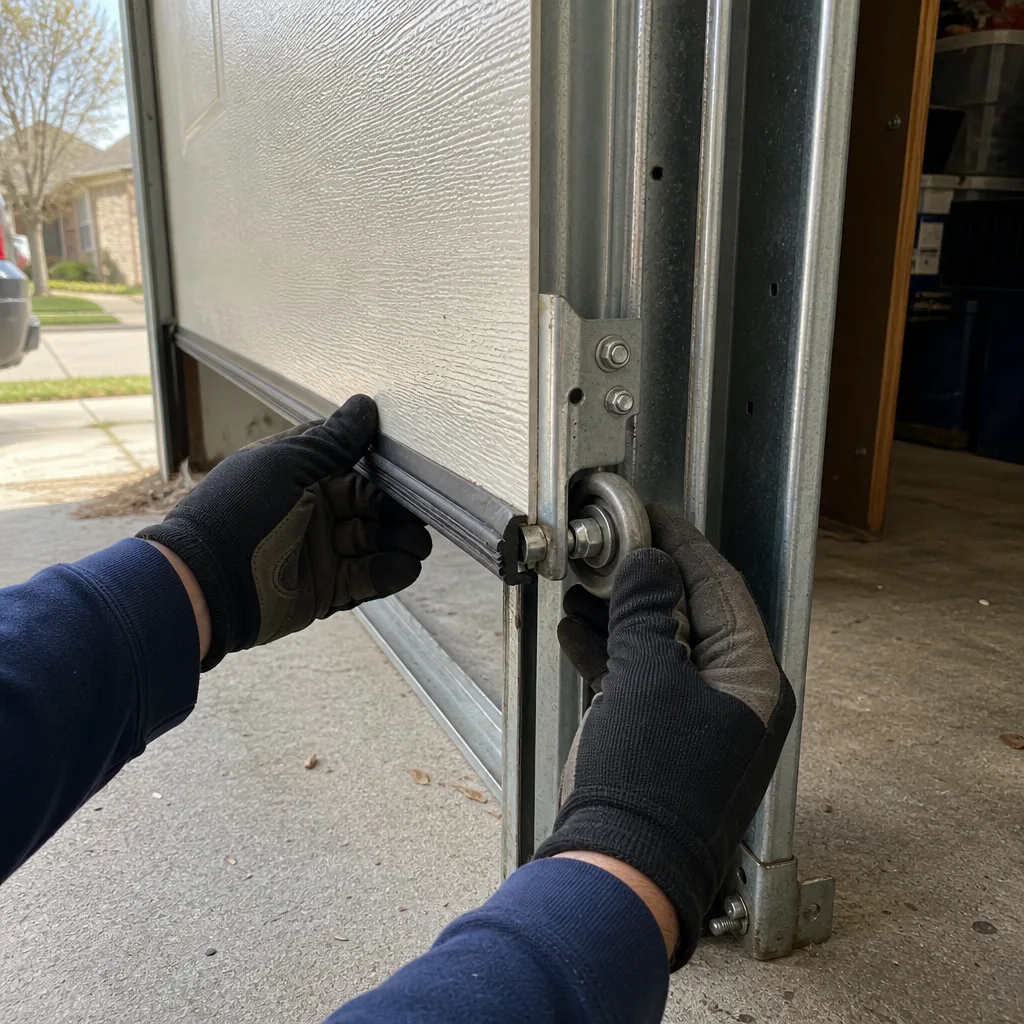
Each panel is connected by hinges, and those hinges hold rollers that ride in the track. Look for visible rust on the roller stems, missing wheel rubber, or hinges that are twisted or loose. You don’t need to touch them. A visual check tells us if we need to pull the track covers off during a service call.
Step 5: Check the Weatherstripping
The bottom seal and the side seals should make consistent contact with the floor and the frame. In Sugar Land, weatherstripping takes a beating from the heat, the humidity, and the occasional flooding. Cracked or curled bottom seals let in water, pests, and heat. If the seal looks like a potato chip, it’s time to replace it. While this isn’t a mechanical safety risk, it is a door-health issue, because water intrusion rusts the bottom panel and rots the framing.
Nuisance Symptom vs. Safety Risk: Know the Difference
Not every warning sign is an emergency, but Sugar Land homeowners get into trouble when they treat a safety risk as a nuisance. Here’s the honest breakdown.
Nuisance Symptoms (Watch It, Schedule It)
- Mild squeaking at specific points in travel: usually dry rollers or hinges. A lube job and a minor tune-up typically fixes it.
- Cracked or curled weatherstripping: a water-intrusion and pest issue, not a safety risk. Schedule a seal replacement.
- Slightly slow response from the opener: can be a sensor alignment or a worn opener gear. Worth checking, not worth panicking.
- Minor cosmetic rust on bolts or brackets: as long as the structural steel is intact, surface rust is an aesthetic issue.
Safety Risks (Stop Using the Door and Call)
- A broken torsion spring: even one broken spring changes the balance of the entire door. The door can fall.
- A frayed or rust-streaked cable: cables hold the door’s weight. If one goes, the door goes.
- A door that rises unevenly or hangs crooked: the track and spring system are no longer distributing weight correctly.
- A loud pop followed by a door that won’t move: a spring has snapped, and the door is under uncontrolled tension.
- Any door that falls, drops, or jerks when manually operated: this one needs an immediate professional, not a YouTube video.
The rule we use is simple: if the symptom affects the sound of the door, watch it. If it affects the structure, the balance, or the cables, stop using it and call someone who can diagnose it safely.
How Sugar Land’s Climate Accelerates Specific Failure Types
Sugar Land’s climate is hard on garage doors in ways that a homeowner up in Conroe or out in Katy won’t experience in the same way. We’re close enough to the Gulf to have consistent humidity, heavy rainstorms, and soil that moves. Here’s exactly what that does to your door over time.
Rust on Springs and Hardware
Humidity is the enemy of steel, and Sugar Land has more of it than most of Texas. Torsion springs are oil-tempered steel, and even a tiny scratch in the surface finish lets moisture start working. Once corrosion sets in, the spring loses tensile strength and breaks earlier than its rated cycle life. We count spring cycles the way you count tire miles, and a spring that breaks at 7,000 cycles instead of 10,000 usually broke early because of corrosion, not fatigue. Regular lubrication and keeping the garage ventilated helps, but in this climate, a visual spring check every six months is worth it.
Wood Panel Swelling from Rain
Wood garage doors in Sugar Land absorb moisture during the spring and fall rain seasons. When hardwoods like cedar or redwood swell, the panels expand against the frame, bind in the track, and put extra load on the hinges, springs, and opener. We see doors that run fine in January and drag in April, simply because the wood has taken on water. If your wood door is harder to open after a heavy rain, that’s not the springs. That’s the panels, and it’s a known Sugar Land condition.
Sensor Misalignment from Ground Movement
Sugar Land sits on clay-heavy soil that expands and contracts with moisture. After the big spring rains, the ground under driveway slabs shifts, and the concrete moves fractions of an inch. That’s enough to knock the photo-eye sensors out of alignment, which causes the door to stop halfway down or refuse to close entirely. If your opener is a garage door opener in Sugar Land that’s been reliable for years and suddenly starts stopping mid-cycle without reason, check the sensors before you buy a new motor. Nine times out of ten, the motor’s fine.
Heat and the Opener Motor
Sugar Land summers put consistent heat stress on opener motors, especially on south-facing garages that bake all afternoon. The motor’s internal thermal overload switch can trip, causing the opener to stop working in the middle of a hot afternoon and then work fine an hour later. That’s not a motor failure; that’s the motor protecting itself. But repeated overheating shortens the motor’s lifespan. If your garage gets above 115 degrees in the summer, consider a belt-drive opener with a DC motor, which runs cooler than an AC motor.
Age-Based Warning Signs: What Your Door’s Years Are Telling You
Every component on a garage door has a service life, and Sugar Land homeowners who understand that life get more honest service from their doors. Here’s what age means in this climate.
The Door Itself
Steel doors last 15 to 25 years in Sugar Land, depending on exposure and maintenance. Wood doors last 10 to 15 without significant refinishing. Aluminum doors hold up well to humidity but dent easily. The first signs of door age are panel fading, steel delamination at the bottom corners, and stress cracks around the hinges. Once the bottom panel starts rusting from the inside, replacement is the honest recommendation, not another patch.
The Springs
Torsion springs are rated in cycles, and a standard 10,000-cycle spring lasts roughly 7 to 10 years in a typical Sugar Land home, used a few times a day. Extension springs, which you’ll find on older doors, last fewer cycles and are less safe when they fail. If your door is over 10 years old and the springs have never been replaced, they’re in the danger zone. Wayne Dalton and Raynor doors often use proprietary spring systems that need specific replacement parts, so the door brand matters when it comes time to replace a spring.
The Opener
Opener life in Sugar Land is 10 to 15 years, with the belt and gear set wearing out first. A Chamberlain or LiftMaster opener from the early 2010s is typically reaching the end of its service life right now, and the warning signs are reduced lift power, slower travel, and a motor that runs hot. Replacing an old opener with a newer belt-drive unit is usually more cost-effective than replacing the gear set on a unit that may also have a failing logic board.
If your door is pushing past those age milestones, it’s time to evaluate it as a system. A new opener on a door with worn springs is wasted money. A door with a strong frame but old rollers is worth the investment in new rollers. And a 20-year-old door with a cracked panel and faded finish might be ready for a full garage door installation in Sugar Land. We’ve helped homeowners decide that equation honestly for 29 years, and we’ll tell you when repair beats replacement instead of selling you a whole door because the opener’s old.
Opener Warning Signs: When the Motor Is the Messenger, Not the Problem
If the opener is straining, the problem is almost never the opener. That’s a phrase you’ll hear me say often, because after 29 years of opener calls across Sugar Land, the pattern is clear: homeowners blame the motor, but the motor is just the messenger. A garage door opener is designed to move a balanced door, not to lift dead weight. When a spring loses tension or a roller seizes, the motor works harder, runs hotter, and dies sooner. Here’s how to tell the difference.
The Opener Runs but the Door Doesn’t Move
That’s the opener’s gear set stripped or the carriage disconnected from the rail. On LiftMaster and Craftsman openers, the plastic gear inside the motor housing is a known wear item, and when it strips, the motor spins, but the door stays. This is a repairable opener issue, but it’s often paired with a door balance problem that caused the excessive load in the first place.
The Opener Stops Mid-Cycle
That’s usually the photo-eye sensors, the travel limits, or the thermal overload. Check for spider webs across the sensor lenses, sensor alignment after ground movement, or a garage temperature that’s overcooking the motor. If the opener reverses immediately after touching the floor, the downforce setting is too sensitive or the bottom seal is binding.
The Opener Grinds or Rattles
That’s the belt or chain slipping, or the motor mounts vibrating loose from the ceiling. A loose opener will rattle the entire track assembly and accelerate wear on the rail. Tighten or replace the mounts, and the noise usually stops. If it doesn’t, the gear set is the next suspect.
The Opener Works but the Door Moves Slowly
Slow movement with a healthy motor sound is an unbalanced door, a worn spring, or bad rollers, not an opener failure. You don’t need a new motor. You need the door balanced. An opener that’s been pulling an unbalanced door for a year has already lost lifespan, but fixing the balance before it burns out saves the motor and the money.
Common Mistakes to Avoid
- Lubricating a door that’s already grinding. Lube is for maintenance. Grinding is damage. Adding lube to a door with worn rollers makes it quieter for a week and lets the underlying problem get worse without you noticing.
- Ignoring a popping sound because the door still works. A pop is the sound of something letting go, even if the door labors up afterward. The next pop may be the one that drops the door on your car or, worse, under the door itself.
- Adjusting, shimming, or “tightening” the springs yourself. Torsion springs hold enough force to break a wrist or a jaw if the winding bar slips. I’ll say it plainly: this is the one repair that can kill you. There is no DIY version worth the hospital bill or the funeral. Call a professional.
- Replacing the opener before checking the door balance. A new motor on an unbalanced door burns out the new motor just like it did the old one. Balance the door first, then evaluate the opener.
- Painting over rust on cables or springs. Paint hides rust. It doesn’t stop it. A rusted cable still snaps under tension, and now you can’t see the damage you painted over.
- Waiting for the door to fail before calling. This is the most expensive mistake, because a door that fails on a schedule picks its own time, and that time is usually a Monday morning at 7 a.m. with your truck inside. The repair costs the same whether you call now or after it breaks, but the inconvenience and the risk are not the same.
- Hiring an out-of-town national outfit because the ad looked cheaper. Sugar Land homeowners have been burned by bait-and-switch pricing from operations that quote $29 and bill $400 at the door. Ask anyone on your street. The name on the van should be the name on the license, verifiable before the truck arrives.
When to Call a Professional
You should call a professional when the symptom affects the structure of the door, the balance, or the safety systems. That means a broken spring, a frayed cable, a door that sits crooked or rises unevenly, a loud pop followed by any change in operation, or any door that has come off its track. You should also call when you’ve noticed the same warning sign twice, because a door that talks to you is a door that’s trying to tell you something. Otto’s Garage Door offers free estimates in Sugar Land. Call Otto at (346) 484-4781 and a live person answers, day or night. If it can’t wait, we’ll tell you. If it can, we’ll tell you that too. You can also browse more guides & resources on our blog.
Frequently Asked Questions
A loud popping sound usually means a torsion spring broke or a cable let go under tension. It’s the sound of stored energy releasing, and once the spring breaks, the door loses its balance and becomes dangerously heavy. Stop using the door and call a professional same day. Otto’s Garage Door answers 24/7 at (346) 484-4781 and quotes the repair on the phone before we even get in the truck.
In Sugar Land, torsion spring replacement typically runs $200 to $450 installed, depending on whether you need a standard pair or a proprietary system from Wayne Dalton or Raynor. The price is quoted and agreed before any work starts, and it doesn’t change at the door. Call (346) 484-4781 for an exact quote on your specific door, and we’ll tell you the real number right on the call.
No. A garage door with one broken spring is lifting double the weight on one side, and the remaining spring is under extra load that it was not rated for. The door can bind, come off the track, or fall. Disconnect the opener and leave the door closed until a professional can replace the broken spring.
A door that reverses mid-close usually has a photo-eye sensor problem, a misaligned safety beam, or a closing-force setting that needs adjustment. In Sugar Land, heavy rain shifts the soil under the driveway and knocks sensors out of alignment, so check that both sensor lights are solid before assuming the opener is broken. If the sensors are aligned and the problem continues, call Otto at (346) 484-4781 for an accurate diagnosis.
A steel garage door in Sugar Land lasts 15 to 25 years with proper maintenance, while wood doors last 10 to 15 due to humidity and rain exposure. Springs last 7 to 10 years, rollers last 5 to 10 years depending on quality, and openers last 10 to 15 years. If your components are aging into those ranges, a preventive check now can save you from an emergency replacement later.
Turn it off, disconnect the opener, and inspect the rollers and hinges visually from the ground. If the shaking is mild and the door still moves evenly, schedule a tune-up. If the door shakes violently, lurches, or rises unevenly, stop using it and call a professional immediately, because shaking is a balance or track problem, and continued use will damage the opener and may cause the door to come off the track.
The Bottom Line
Your garage door tells you when it’s failing. The grinding, popping, squealing, shaking, and stalling are not personality quirks; they’re specific mechanical messages with specific meanings. In Sugar Land, humidity accelerates rust, rain swells wood panels, and shifting soil knocks sensors out of alignment, so warning signs show up earlier and more loudly than in drier parts of Texas. The smartest thing you can do is listen and act early. The dumbest thing is to wait until the door fails on its own schedule. When you’re ready to fix it, go to Otto’s Garage Door home for a name you can verify, a live person on every call, and a price that doesn’t change at the door. We’ve been serving this county since 2004, and we’ll be here when you call.
Written by Otto Reinhardt, Owner at Otto’s Garage Door, serving Sugar Land since 2004.